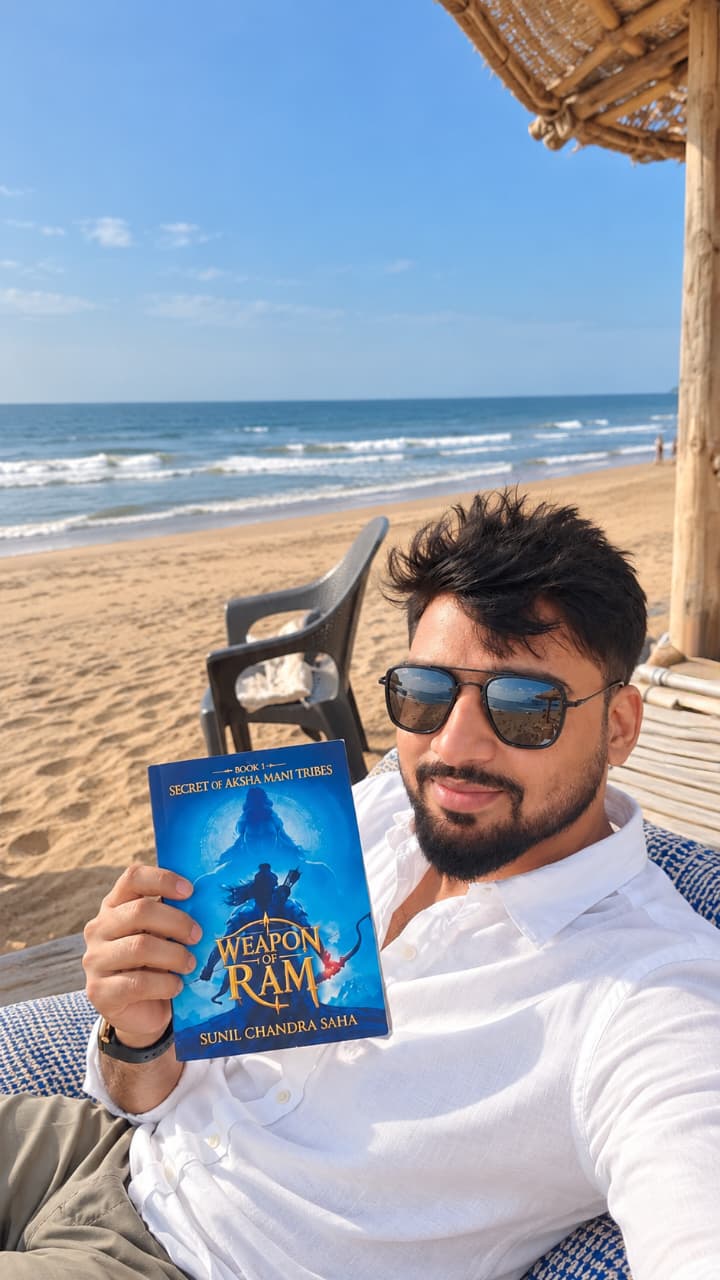
Weapon Of Ram - Trilogy
Post-Ramayana Fiction: The Story After the War
November 10, 2026
·
By Sunil Chandra Saha
·
9 min read
Post Ramayana book guide: what scripture says after the war, where fiction takes over, and where the Weapon of Ram trilogy picks up the story.
Quick answer: A post-Ramayana book is a story set after Ram defeats Ravana. The Valmiki Ramayana itself covers this period only in its last book, the Uttara Kanda: the coronation, Sita’s banishment, the birth of Lava and Kusha, and Ram’s departure. Novels such as the Weapon of Ram trilogy go further and imagine what came next, and they are clearly fiction.
A post-Ramayana book is a story that begins when the war is over. Ravana is dead, Sita is free and Ram is crowned. Many readers would say that is the end. For many of us it is where the questions start. What happened to the divine weapons? Who guarded them? What did the people who survived the war do next?
The phrase can mean two different things, and it helps to keep them apart. The first is the epic’s own ending, which the Valmiki Ramayana tells in its last book. The second is modern fiction that picks up after the epic and invents new characters, places and rules. This page is a guide to both. It tells you where scripture ends and where imagination begins.
In the Valmiki Ramayana, Ram, Sita and their companions return to Ayodhya, and Ram is crowned. The Uttara Kanda, the last book, then covers his reign, Sita’s banishment, the birth of Lava and Kusha, the Ashwamedha sacrifice and Ram’s last days. The Wikipedia article on the Uttara Kanda describes the same contents, including Valmiki training the twin sons. For a longer, step-by-step account, read our post on what happened after the Ramayana.
| What happens after the war | Where it comes from | How to read it |
|---|---|---|
| Ram is crowned and rules; Ram Rajya is remembered as a time of just rule | Valmiki Ramayana and later tradition | Widely accepted across versions |
| Sita is sent away and Lava and Kusha are born at Valmiki’s ashram | Uttara Kanda | Part of the epic, though scholars debate the book’s origin |
| Lava and Kusha sing the Ramayana before Ram | Uttara Kanda | Ram learns they are his sons |
| The twins capture the horse and fight Ram’s army | Later and regional retellings | Not in the main Valmiki text |
| Sita returns to the earth; Ram departs at the Sarayu | Uttara Kanda, with variants in other versions | Jain and Burmese versions tell it differently |
| Divine weapons, hidden guardian tribes and the Aksha Mani | The Weapon of Ram trilogy | A story idea from the trilogy, not scripture |
Scholars do not agree. According to the Wikipedia article and the sources it cites, many scholars treat the Uttara Kanda, and the Bala Kanda too, as later additions. They point to differences in language and style from books two to six, and to the fact that both are missing from the oldest manuscript the article mentions. Some of these scholars hold that the original poem ended with the Yuddha Kanda.
Other traditions treat the whole text as Valmiki’s own work. I do not take a side on this. What matters for a reader is to know that the debate exists, so that the later story of Sita and Ram is not presented as settled fact. It is one reason post-Ramayana fiction is such an open field: the epic itself is told in layers.
Some versions of the Ramayana say Hanuman received a boon to remain on earth as long as Ram’s story is told. Tradition counts him among the Chiranjivi, the long-lived figures. Popular belief places him in the Himalayas, but no text gives an exact place. Our post on whether Hanuman is still alive separates these three layers.
The epic does not follow Ram’s divine weapons after his departure. Traditions and later layers offer different ideas, and none is verified. See where Lord Ram’s weapons are now for the full discussion. This is the very question my trilogy starts from.
The Valmiki Ramayana does not trace Chandrahasa after Ravana’s death. Later retellings answer differently, and in my own trilogy the sword ends up with the Cave Tribe. That last part is a story idea, not scripture. Read where Chandrahasa is now and the guide to Ravana’s weapons for the sources.
The Kaustubha Mani is a traditional jewel that rose from the Samudra Manthan, the churning of the ocean. In the trilogy, the Aksha Mani are living stones carved from it. Our post on the Kaustubha Mani explains the tradition first and then shows where the fiction begins.

Several authors have written stories around the Ramayana, and the genre is wider than any one series. I keep a separate guide to the best Indian mythology books and one on Indian mythology fiction. To avoid mixing opinion with fact, the Weapon of Ram trilogy is the only series I describe in detail on this page. Here is where its three books stand, according to the Book 1 page and the FAQ.
| Book | Title | Status |
|---|---|---|
| Book 1 | Secret of the Aksha Mani Tribes | Out now in print on Amazon India and Flipkart, and on Kindle in 12 countries |
| Book 2 | Raavan of Persia | Listed for Diwali 2026 on the FAQ; see the Book 2 page for the latest |
| Book 3 | Rebel Gods of Pyramids | Listed for Diwali 2027 |
My own method is simple. Read the scripture first, even in a short form. Then read the fiction as a “what if” built on top of it. When a book says a weapon was hidden, ask whether that comes from the epic, from tradition or from the author. Good novels tell you. I try to do the same, which is why every post on this site marks scripture, later retellings and my own story ideas separately.
It also helps to remember that the epic itself has many tellings. The Valmiki Ramayana is the oldest and the most cited, but other versions, from Jain traditions to Burmese tellings, end the story differently. Post-Ramayana fiction is one more voice in a very old conversation, and it deserves the same respect.
I am Sunil Chandra Saha, an author from Bengal and co-founder of Blue Tea. I wrote this trilogy for readers who love the Ramayana and wonder what came next. The following is a story idea from the trilogy, not scripture. Weapon of Ram is set around 3700 BCE in Bharatvarsha. After the war, Ram creates the Aksha Mani system, living stones carved from the Kaustubha Mani, so that no single person can use divine weapons freely. The system has four safeguards: a Power Switch, a Mantra Lock, a Living Stone and a Kill Switch.
Five guardian tribes, the Mountain, Jungle, Cave, Desert and Delta, hold the stones and weapons. When the system begins to fail, someone starts hunting the tribes. The route runs from Kailash to Indraprastha, Kannauj, Takshila, Parsa (Persia), Egypt and Kerala. The main characters, Dhruv, Tara and Darukh, are original. Ram, Ravana, Hanuman and the weapon names come from tradition, while the histories and rules I give them are my fiction. For the cast, see the Book 1 story and characters page, the trilogy overview and the Voraka Magazine feature, which includes an interview with me.
It is fiction set after Ram defeats Ravana. It either retells the epic’s last book, the Uttara Kanda, or invents new stories, characters and rules for the years that follow.
Ram is crowned in Ayodhya. The Uttara Kanda then covers his reign, Sita’s banishment, the birth of Lava and Kusha, and his departure from the world.
Scholars disagree. Many treat it as a later addition because of differences in language and style, while others consider the whole text Valmiki’s work.
Yes. It is a mythology fantasy trilogy set around 3700 BCE that begins after Ram defeats Ravana. It is inspired by the epic and is not a retelling or a scriptural continuation.
Book 1 is Secret of the Aksha Mani Tribes, Book 2 is Raavan of Persia and Book 3 is Rebel Gods of Pyramids.
Not for Weapon of Ram. A basic knowledge of the epic is enough, because the story introduces its own tribes and characters.
Print copies are on Amazon India and Flipkart, and the Kindle edition is available in 12 countries.
Sources: Wikipedia on the Uttara Kanda; the linked posts above; the Weapon of Ram book page and FAQ on this site.
Ready to Enter the World of Ram?