Weapon Of Ram - Trilogy
What Is Aksha Mani? The Five Living Stones of Weapon of Ram
November 10, 2026
·
By Sunil Chandra Saha
·
9 min read
What is Aksha Mani? Learn how the five living stones work in Weapon of Ram: four safeguards, five tribes, and how they differ from the Kaustubha Mani.
Quick answer: The Aksha Mani are the five living stones at the centre of the Weapon of Ram trilogy. In the novels, each stone is bonded to one guardian tribe and acts as the only key to one divine weapon. This is a story idea from the trilogy, not scripture. The Aksha Mani are fiction, but they are built around a real Hindu jewel, the Kaustubha Mani of the Samudra Manthan.
The Aksha Mani is the central invention of my trilogy Weapon of Ram. The name is not found in the Valmiki Ramayana or in the Puranas. I created it to answer one question: after Ram defeated Ravana, what stops the next powerful person from misusing a divine weapon?
In the story, the Aksha Mani are five living stones. They are described as divine stones carved from the Kaustubha Mani, which emerged from the Samudra Manthan, and blessed by Vasuki, the serpent king of the deep. Each stone is bonded to one tribe and is the only key to one weapon. Together the stones form a system that locks divine weapons so that no single person can use them freely.
If you are new to the trilogy, the trilogy overview and the Book 1 story and characters page give the wider picture. This post stays with the stones themselves.
No. The Aksha Mani is fictional. I want to keep that line clear, because mythology readers care about it, and so do I.
The Valmiki Ramayana records no such tribes or stones. The weapon names come from tradition, but their histories and guardianship in the novels are fiction. To read the traditional side, see our posts on the Kaustubha Mani and on where Ram’s weapons are said to be now.
In tradition, the Kaustubha Mani is a jewel that rose from the churning of the ocean. Hindu tradition associates it with Vishnu. That much belongs to the old stories. You can read the background in the Wikipedia entry on Kaustubha.
In my story, the Aksha Mani are living stones carved from that jewel. The idea is simple. If a weapon is tied to something that came out of the Samudra Manthan, then the lock is as old and as serious as the weapon. The trilogy also ties the stones to Vasuki, the serpent king who served as the churning rope. That is my own invention built on the old image, not a claim about scripture.
The system has four safeguards. I designed them so that a weapon cannot be stolen and used in one move.
| Safeguard | What it does in the story |
|---|---|
| Power Switch | Without the Aksha Mani, a weapon is inert. The stone is the switch. |
| Mantra Lock | Even with the stone, the weapon releases no power without the correct mantras. |
| Living Stone | The stone senses intent, recognises its guardian lineage, and cannot be replicated or counterfeited. |
| Kill Switch | Whoever controls the stone controls access to the most destructive force, so tyrants and conquerors will hunt it. |
The Kill Switch is a safety feature and a weakness at once. A system that can shut a weapon down is a prize for anyone who wants to rule. That is why, in the story, the guardians are hunted one by one. Whoever holds the stones holds the weapons.
That is the story of Book 1. The guardians are hunted, and the secrets of the system are scattered. The central question is who controls the weapon that controls all weapons.
Five stones exist, and each is bonded to one guardian tribe. The five tribes are Mountain, Jungle, Cave, Desert and Delta. They are bound by discipline, doctrine and training rather than blood. They have not met in generations and do not know each other’s faces, which makes the system fragile once the hunt begins.
| Tribe | What the site says about it |
|---|---|
| Mountain | Kailash region. Guards Kodanda, Ram’s bow. Dhruv is its last Shastradhari. |
| Jungle | Mahavan forests. Tied to Nandaka. Darukh comes from this tribe. |
| Cave | Known as the Light Speakers. Tied to Chandrahasa. Tara is its chosen warrior. |
| Desert | Known as the Fallen. Its weapon is not named on the site. |
| Delta | Known as the Lost. Its weapon is not named on the site. |
Do the stones have other qualities? In the novel’s lore they glow under a full moon and grow dangerously powerful on Blood Moon nights. I keep the rest of the story for the book itself.
Three original characters carry the story. They are my creation, not figures from the Ramayana.
Ram and Ravana appear from tradition. For the traditional story behind Ram’s great bow, see our post on Kodanda.
The story moves along a route from Kailash to Indraprastha, Kannauj, Takshila, Parsa (Persia), Egypt and Kerala. It is set around 3700 BCE in Bharatvarsha. If you want the reading order for the three books, our Weapon of Ram books in order page lays it out. For the magic-system angle on the original epic, read Valmiki’s magic system decoded.
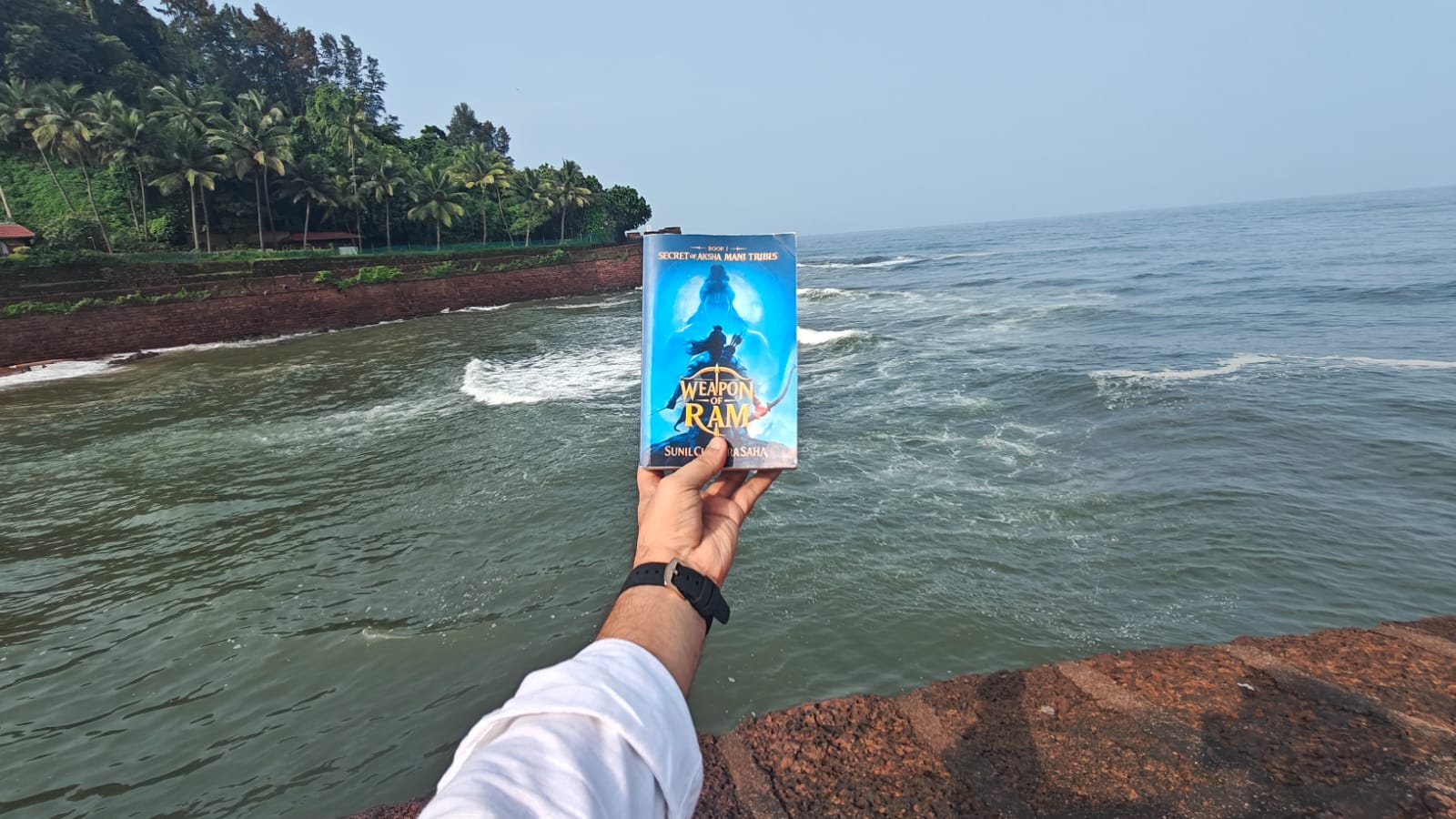
I am Sunil Chandra Saha, an author from Bengal and co-founder of Blue Tea. The Aksha Mani are the heart of the trilogy I wrote. Book 1, Secret of the Aksha Mani Tribes, is available now in print on Amazon India and Flipkart, and as a Kindle edition in 12 countries. The FAQ lists Book 2, Raavan of Persia, for Diwali 2026 and Book 3, Rebel Gods of Pyramids, for Diwali 2027. You can read more on the Book 1 page, the Raavan of Persia page and the FAQ.
The Aksha Mani are five fictional living stones in the Weapon of Ram trilogy. Each is bonded to one guardian tribe and is the only key to one divine weapon. They are a story idea from the trilogy, not scripture.
No. The Valmiki Ramayana records no such stones or tribes. The Aksha Mani is the author’s invention, built on the traditional idea of the Kaustubha Mani.
The Kaustubha Mani is a jewel from the Samudra Manthan in Hindu tradition. The Aksha Mani are fictional living stones that the trilogy describes as carved from it.
There are five. Each is bonded to one of the five guardian tribes: Mountain, Jungle, Cave, Desert and Delta.
They are the Power Switch, the Mantra Lock, the Living Stone and the Kill Switch. Together they make sure a divine weapon is inert without its stone and the right mantras.
Five guardian tribes guard them. Characters include Dhruv of the Mountain Tribe, Tara of the Cave Tribe and Darukh of the Jungle Tribe.
No. Ram and Ravana appear, but the story introduces the stones, the tribes and the new characters as it goes.
The print edition is on Amazon India and Flipkart, and the Kindle edition is available in 12 countries.
Sources: Wikipedia: Kaustubha; the Weapon of Ram book page, FAQ and trilogy overview on this site.
Ready to Enter the World of Ram?