Weapon Chronicles
Kaustubha Mani: The Gem of Samudra Manthan and Its Link to the Aksha Mani
November 6, 2026
·
By Sunil Chandra Saha
·
9 min read
Kaustubha Mani explained: how Vishnu’s gem rose from the Samudra Manthan, what tradition says, and how it inspires the Aksha Mani in Weapon of Ram.
Quick answer: The Kaustubha Mani is the divine ruby that rose from the ocean during the Samudra Manthan, the churning of the ocean of milk. Tradition says Vishnu took it and wears it on his chest, which gives him the name Kaustubhadhari. In my Weapon of Ram trilogy, the Aksha Mani are living stones carved from the Kaustubha Mani. That link is a story idea from the trilogy, not scripture.
The Kaustubha Mani is a jewel from Hindu tradition, described as the most magnificent gem in creation. The Wikipedia entry on Kaustubha calls it a divine ruby, or ratnam, and a symbol of divine authority. The name itself is glossed there as “crest jewel”. It is one of the treasures that emerged when the devas and asuras churned the ocean of milk in search of amrita, the nectar of immortality, and the same article describes it as the lotus-hued ruby.
Two things make it important. First, it belongs to Vishnu. Second, it stands for divine authority. That is why I chose it as the origin of the stones in my trilogy, and it is also why I keep a clear line between what tradition says and what I have invented.
The Samudra Manthan is one of the oldest and best-loved stories in Hindu tradition. The devas and asuras agreed to churn the ocean together. Mount Mandara became the churning rod, and when it sank, Vishnu in his Kurma form, the tortoise, held it up on his shell. Vasuki, the serpent king, became the churning rope. As the ocean was churned, treasures rose up one after another.
Kaustubha was one of them. According to the Wikipedia article on the Samudra Manthan, Vishnu claimed it as the most valuable gem. The Skanda Purana, as Wikipedia quotes it, says all the devas gave the Kaustubha to Vishnu, and that it shone like the sun and lit up the three worlds.
The sources do not agree on one order or one list, so please read this table as a summary and not a strict sequence. Wikipedia notes that the treasures are usually counted as fourteen, that lists in scripture range from nine to fourteen, and that the Puranas, the Ramayana and the Mahabharata differ slightly.
| Treasure | What happened to it |
|---|---|
| Lakshmi | Chose Vishnu as her consort |
| Apsaras | Chose the Gandharvas as companions |
| Varuni | Accepted by the devas |
| Kamadhenu (Surabhi) | Taken by Brahma and given to the sages |
| Airavata and other elephants | Taken by Indra |
| Uchhaishravas | The seven-headed horse, given to Bali |
| Kaustubha | Claimed by Vishnu as the most valuable gem |
| Kalpavriksha | Taken to Indraloka by the devas |
| Chandra, the crescent moon | Claimed by Shiva |
| Dhanvantari with the amrita | Appeared with the nectar |
| Halahala | The poison, swallowed by Shiva |
Later lists add more, such as Vishnu’s conch Panchajanya. Where a list differs, I have stayed with the version in the Wikipedia article.
Vishnu does. That is why he is called Kaustubhadhari, the bearer of Kaustubha. Wikipedia also notes that the Mahabharata (Sabha Parva, chapter 5) describes Krishna, an avatar of Vishnu, with the jewel glittering on his chest.
In classical images of Vishnu you will often see a large jewel at the chest. That is the Kaustubha. It is a quiet detail, but it tells you the god carries the finest of what the ocean gave up.
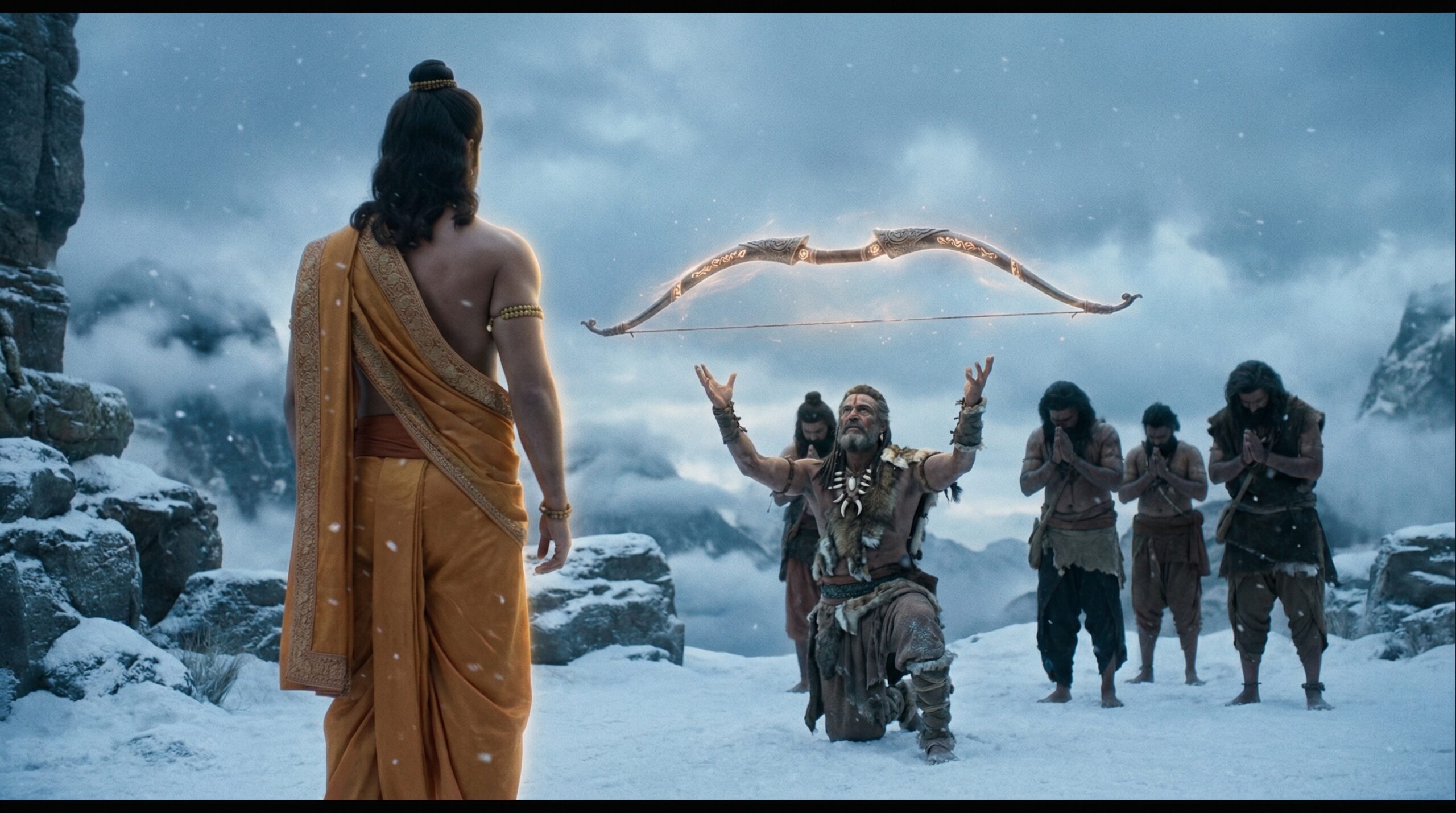
This is a story idea from the trilogy, not scripture. In Weapon of Ram, the Aksha Mani are living stones carved from the Kaustubha Mani, which emerged from the Samudra Manthan, and they were blessed by Vasuki. After Ram defeats Ravana, who had taken the Chandrahasa sword, Ram asks how such a thing can be prevented from happening again. His answer, in the story, is the Aksha Mani system. The Kaustubha is traditional. The Aksha Mani are fictional, and only their origin draws on the Samudra Manthan. The FAQ on this site says the same.
In the story, the system has four safeguards, and each is named in the book’s description:
Five guardian tribes each hold a fragment of the system. They do not know each other’s faces and have not met in generations, and someone is hunting them one by one. The tribes and their histories are my invention and do not appear in the Valmiki Ramayana. The weapons whose names the trilogy borrows from tradition include Kodanda, Nandaka and Chandrahasa. For the bow, read the Kodanda explainer, and for the sword, the Chandrahasa post.
I wanted the stones to feel old. A stone that comes from the churning of the ocean carries the weight of one of the first great acts of cooperation in tradition, where gods and demons had to pull on the same rope. It also fits a story about weapons that should not be held by one hand alone. That is my choice as an author, not a claim about the tradition. For the real story of the churning, the Puranas and the epics are the place to go.
The Kaustubha belongs to Vishnu, and Ram is traditionally taken as an avatar of Vishnu. A system that Ram builds from a Vishnu jewel therefore sits naturally inside the world. It also sets up a question the trilogy keeps asking: if the stones are alive and can sense intent, who decides what a worthy guardian is?
For Ram’s own weapons, see where Lord Ram’s weapons are now and the astras Vishwamitra gave Ram. For the story, characters and where the Aksha Mani first appear, see the Book 1 story and characters page and the guide to Indian mythology fantasy and the Weapon of Ram trilogy. If the immortals interest you, Is Hanuman still alive? covers what the texts say.
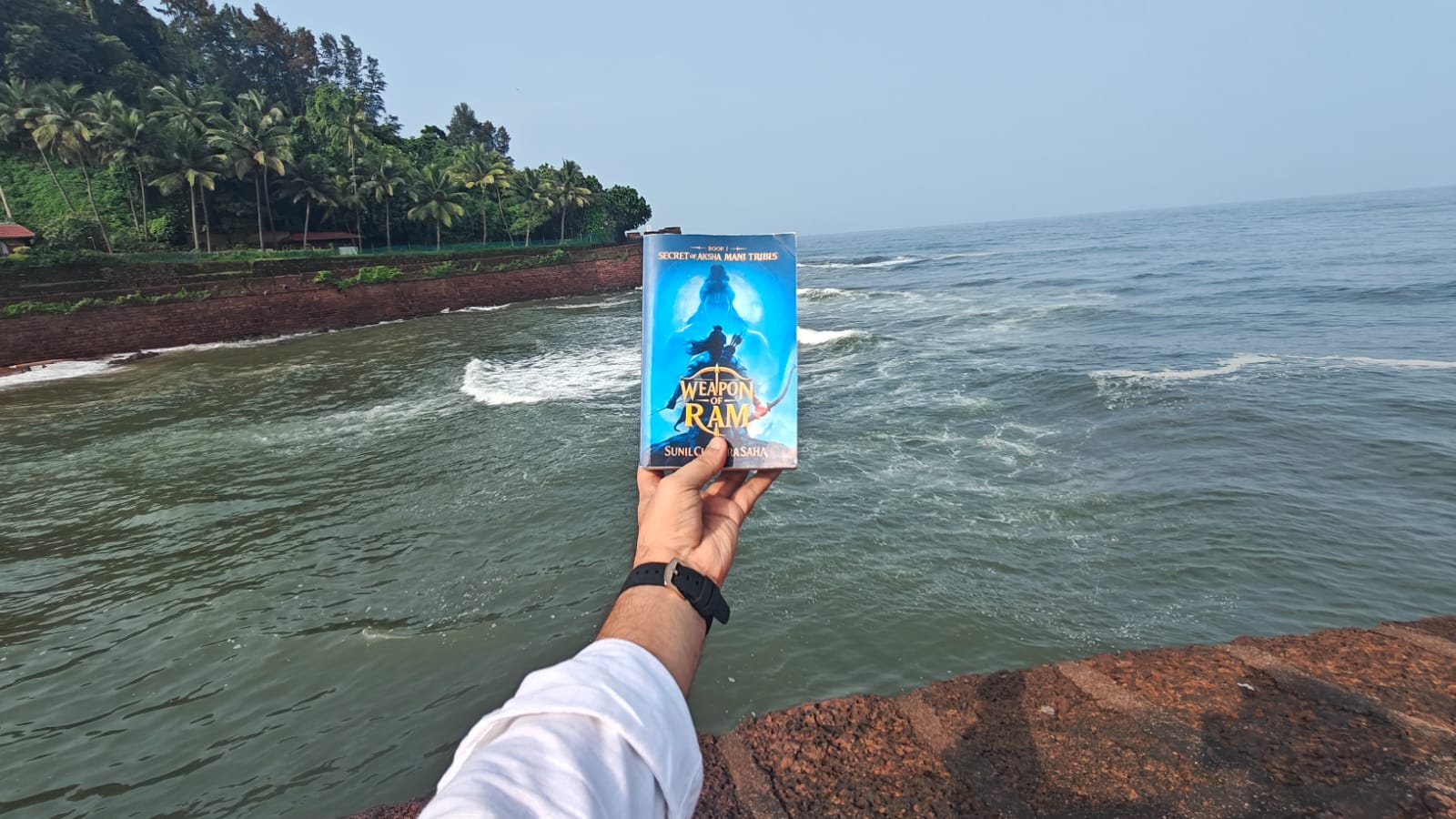
I am Sunil Chandra Saha, an author from Bengal and co-founder of Blue Tea. Weapon of Ram is a post-Ramayana mythology fantasy trilogy, set around 3700 BCE, about the divine weapons after Ram defeats Ravana. Book 1, Secret of the Aksha Mani Tribes, is available now in print on Amazon India and Flipkart, and as a Kindle edition in several countries. Book 2, Raavan of Persia, is planned for Diwali 2026, and Book 3 for Diwali 2027. The story runs from Kailash through Indraprastha, Kannauj, Takshila, Parsa (Persia) and Egypt to Kerala. Read the Book 1 page and the FAQ for more.
It is a divine ruby of Hindu tradition that rose from the ocean during the Samudra Manthan. Vishnu took it and wears it on his chest, so he is called Kaustubhadhari.
Vishnu. The Skanda Purana, as Wikipedia describes it, says the devas gave it to him, and the Mahabharata describes Krishna, an avatar of Vishnu, wearing it on his chest.
Lists differ between texts, and they are usually counted as fourteen. They include Lakshmi, Kamadhenu, Airavata, Uchhaishravas, Kaustubha, Kalpavriksha, the moon, Dhanvantari with the amrita, and the poison Halahala.
Because he wears the Kaustubha Mani. Kaustubhadhari means the bearer of Kaustubha.
Wikipedia glosses the Sanskrit name as crest jewel.
In the Weapon of Ram trilogy, the Aksha Mani are living stones, each bonded to a guardian tribe and acting as the key to one divine weapon. They are fictional.
Only in the novels. The Kaustubha is a traditional jewel. The Aksha Mani are the author’s invention, and only their origin draws on the Samudra Manthan story.
Vasuki is the serpent king who served as the churning rope in tradition. In the novels, the Aksha Mani are blessed by him. That detail is original to the trilogy.
Sources: Wikipedia on Kaustubha and the Samudra Manthan; the Weapon of Ram book page and FAQ on this site.
Ready to Enter the World of Ram?