Weapon Of Ram - Trilogy
Raavan of Persia (Weapon of Ram Book 2): Release Date, Story and What We Know
October 28, 2026
·
By Sunil Chandra Saha
·
9 min read
Raavan of Persia is Weapon of Ram Book 2. Release date (Diwali 2026), what we know about the story, the Ravana Persia link and reading order.
Quick answer: Raavan of Persia is Book 2 of the Weapon of Ram trilogy by Sunil Chandra Saha. The book page and FAQ on this site say it is due at Diwali 2026, which falls on Sunday, 8 November 2026, and that it takes the story beyond Bharat’s borders for the first time. Book 1 is already out, and Book 3, Rebel Gods of Pyramids, is due at Diwali 2027.
Many readers ask me about this book in different words: “Raavan of Persia release date”, “Weapon of Ram Book 2”, “is Ravana from Persia?”. This page answers all three. It also keeps three things apart that often get mixed up online: what the Valmiki Ramayana says, what later retellings say, and what is a story idea from my trilogy.
The FAQ on this site says Book 2, Raavan of Persia, is due at Diwali 2026. Diwali 2026 falls on Sunday, 8 November 2026, according to the festival calendars I checked. That is eleven days from today, 28 October 2026.
A few things I will not guess at. The FAQ page does not list a pre-order link or a price for Book 2, so I am not giving either here. It also does not list formats for Book 2. When links go live, they will appear in the “Get the Book” section on the Weapon of Ram book page and in the FAQ.
| Book | Title | Status as per the site’s FAQ |
|---|---|---|
| Book 1 | Secret of Aksha Mani: Tribes of Weapon of Ram Trilogy | Available now |
| Book 2 | Raavan of Persia | Due at Diwali 2026 (Sunday, 8 November 2026) |
| Book 3 | Rebel Gods of Pyramids | Due at Diwali 2027 |
This is the part where I can only share what is already public. The FAQ says Raavan of Persia “takes the story beyond Bharat’s borders for the first time”. The book page lists the trilogy’s route as Kailash, Indraprastha, Kannauj, Takshila, Parsa (Persia), Egypt and Kerala. Parsa is the old name for Persia, so the title points to the middle of that journey.
Beyond that, I am not publishing plot details here. Please read this as a story idea from the trilogy, not scripture and not history. The trilogy is mythology-inspired fantasy, set in 3700 BCE, and it begins after the events of the Ramayana.
To follow Book 2, it helps to know the world of Book 1. It is built around five Guardian Tribes, three divine weapons and the Aksha Mani, which are living stones bonded to the tribes. In the story, the Aksha Mani share their Samudra Manthan origin with the Kaustubha Mani of tradition, but the Aksha Mani are the novel’s own invention. You can read the full overview on the Book 1 story and characters page.
No scripture I know of says so. In the Valmiki Ramayana, Ravana rules Lanka, an island kingdom across the sea to the south. Hanuman crosses the ocean to reach it, and Ram’s army later builds a bridge. Neither episode takes place in Persia.
Scholars and local traditions debate where Lanka lay, and that debate is a different question from Persia. I know of no established historical source that places Ravana in Persia. So when I say “Raavan of Persia”, I mean the title of a novel, and I am not claiming a historical fact.
| Claim | Where it comes from | How to treat it |
|---|---|---|
| Ravana ruled Lanka, across the sea | Valmiki Ramayana (Sundara Kanda and Yuddha Kanda events) | Scripture |
| Ravana was the son of sage Vishrava and grandson of sage Pulastya | Traditional accounts, as summarised in Wikipedia’s Ravana article | Tradition |
| Shiva pressed down Mount Kailash and gave Ravana the Chandrahasa sword | Popular tradition and later retellings; Valmiki’s account is not clear on the sword’s conditions | Retelling |
| Ravana is tied to Persia | Not found in scripture | Story idea from the trilogy |
If you want to go deeper into the Chandrahasa sword, I covered it in two earlier pieces: the Chandrahasa sword of Ravana and where the Chandrahasa sword is now.
In traditional accounts, Ravana is the son of the sage Vishrava and Kaikasi, who was the daughter of the Rakshasa king Sumali. His grandfather was the sage Pulastya, one of the Saptarishi. Tradition describes him as well versed in the Vedas and the six shastras, and as an ardent devotee of Shiva. That is also why he is such a rich character for a novelist.
A scholar and a devotee can still do great wrong. I made this point in my piece on the sword: a gift from God does not make its holder righteous. Ravana’s story is a warning about power, and that is the thread I follow when I write him.
If you prefer to watch, Episode 15 of my Ramayana series on the Mythology by Sunil channel is called “RAVAAN’S Complete Family History & Why SHIVA Gave Him Chandrahasa?”. It follows the family background of Ravaan and the story of the weapon Shiva gave him, which is the same question that sits behind the title of Book 2. The series is based mainly on the Valmiki Ramayana.
For the full written version of that episode, see how Ravaan became so powerful.
Read in the order of publication. Book 1 sets up the tribes, the weapons and the Aksha Mani. Book 2 moves the story abroad. Book 3 concludes at the Egyptian Pyramids. The books are meant as one connected story.
This is the question I care about most. Familiar figures like Ram, Ravana, Shiva, Vishnu and Vasuki anchor the world of the trilogy. The plot and key characters are original. The tribes, for example, are not recorded in the Valmiki Ramayana. In the fiction, Ram designed them as a security system, which is a story idea and not scripture. For the epic’s own rules, see Valmiki’s magic system of the Ramayana decoded.
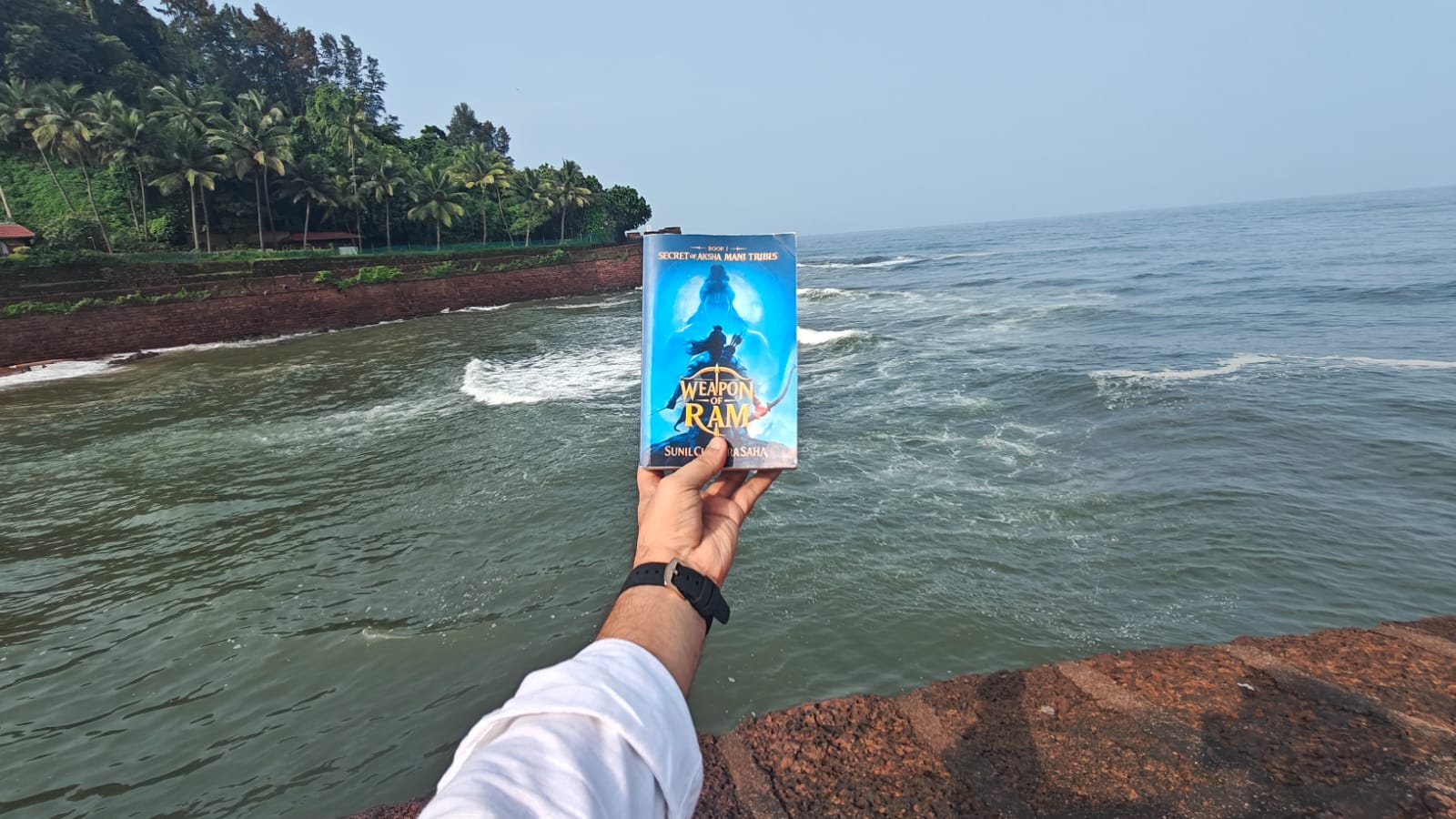
I am Sunil Chandra Saha, co-founder of Blue Tea, and I wrote the Weapon of Ram trilogy to ask a question I could not stop thinking about: what happened to Ram’s weapons after the Ramayana? Book 1, Secret of Aksha Mani: Tribes of Weapon of Ram Trilogy, is available now in print on Amazon India and Flipkart, and on Kindle in 12 countries including India, the USA, UK, Canada, Australia and Germany. Book 2 is next.
The FAQ on this site says Raavan of Persia, Book 2 of the Weapon of Ram trilogy, is due at Diwali 2026. Diwali 2026 falls on Sunday, 8 November 2026.
Sunil Chandra Saha, the author of the Weapon of Ram trilogy and co-founder of Blue Tea.
The site’s FAQ says it takes the story beyond Bharat’s borders for the first time. The trilogy’s route includes Parsa (Persia) and Egypt. Detailed plot points have not been published.
It is best to start with Book 1, Secret of Aksha Mani, because it introduces the five tribes, the three divine weapons and the Aksha Mani. The three books form one connected story.
It is mythology-inspired fantasy fiction. It begins after the Ramayana and uses familiar figures, but the plot and key characters are original, and it is not a scripture-faithful retelling.
The Valmiki Ramayana places Ravana’s Lanka across the sea to the south, not in Persia. The Persia link in the book is a story idea from the trilogy.
Book 1 is in print on Amazon India and Flipkart, and on Kindle in 12 countries. Links for Books 2 and 3 are not listed yet.
Rebel Gods of Pyramids, due at Diwali 2027, concludes the trilogy at the Egyptian Pyramids.
Sources: the Weapon of Ram book page and FAQ; the Wikipedia article on Ravana; Diwali 2026 date per SmartPuja; the Valmiki Ramayana for Lanka across the sea.
Ready to Enter the World of Ram?