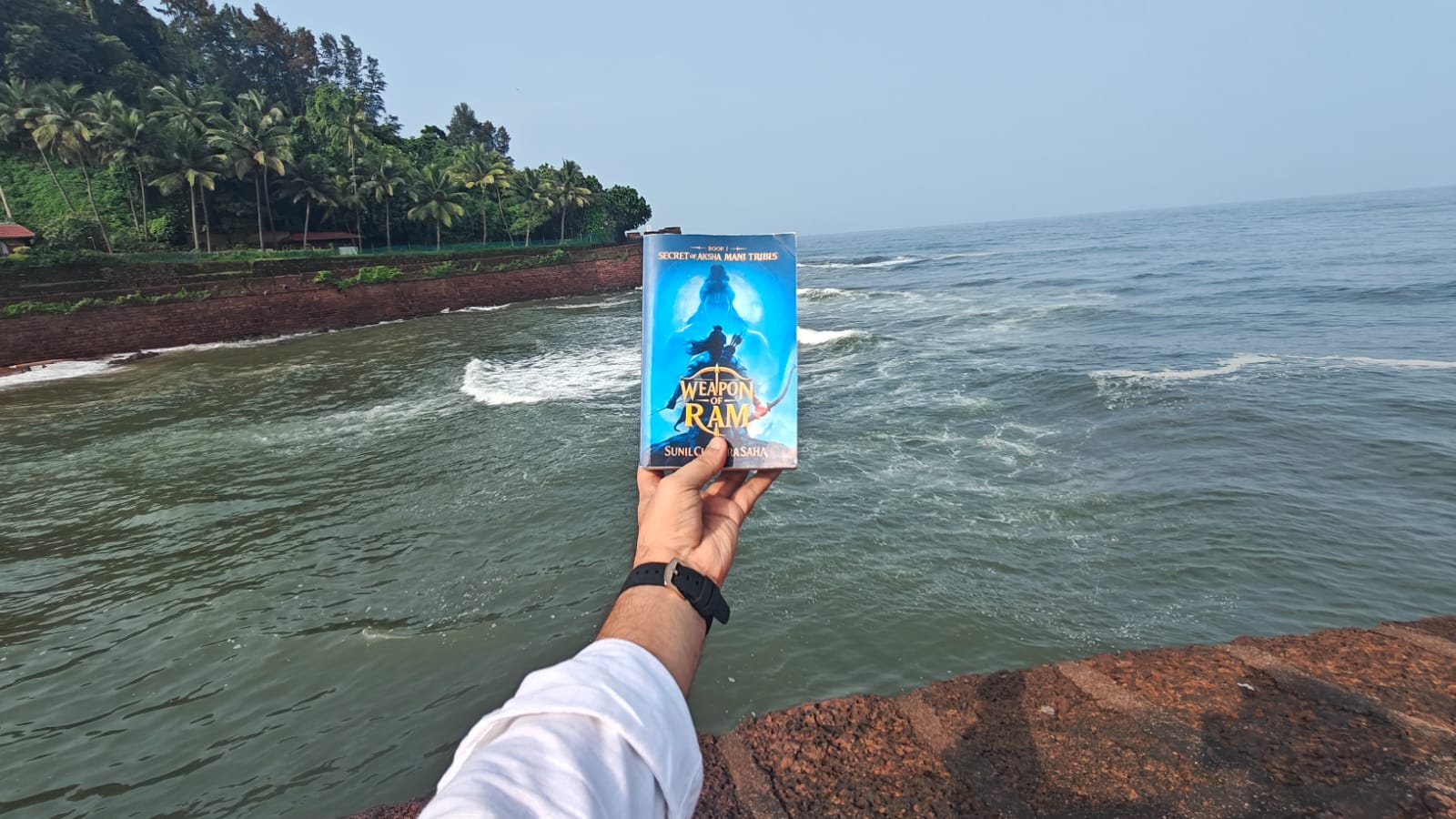
Weapon Of Ram - Trilogy
12 Books to Read If You Loved Amish’s Shiva Trilogy and Ram Chandra Series
November 7, 2026
·
By Sunil Chandra Saha
·
9 min read
Looking for books like Shiva Trilogy? Here are 12 Indian mythology novels for fans of Amish’s Shiva Trilogy and Ram Chandra Series, with years and picks.
Quick answer: If you want books like Shiva Trilogy, start with other Indian mythology novels that treat gods and kings as people: Anand Neelakantan’s Asura, Ashok Banker’s Ramayana series, Chitra Banerjee Divakaruni’s The Palace of Illusions and Kavita Kane’s Lanka’s Princess. Below are 12 reads, grouped by what you liked most in Amish’s books.
Amish Tripathi’s Shiva Trilogy and Ram Chandra Series made a lot of us read mythology again. Once you finish them, the next question is always the same: what do I read now? I am Sunil Chandra Saha, and I wrote the Weapon of Ram trilogy because I wanted that same feeling of a familiar epic turned into a living world. Here is my honest list, with other authors first.
The Shiva Trilogy is three novels: The Immortals of Meluha (2010), The Secret of the Nagas (2011) and The Oath of the Vayuputras (2013). It follows Shiva, a tribal chief from Tibet who is hailed as the Neelkanth, a saviour of the empire of Meluha. Instead of treating Shiva only as a god, the story first shows him as a man who grows into the legend.
That is the idea to look for in your next read. The Ram Chandra Series continues it with Ram: Scion of Ikshvaku (2015), Sita: Warrior of Mithila (2017), Raavan: Enemy of Aryavarta (2019) and War of Lanka (2022). We have written about the first trilogy in our post on The Immortals of Meluha and about the wider genre in Indian mythology fiction.
This table is the short version. Each book is described only by what its author or a reliable reference says it is about. Years are first publication years.
| Book | Author | Year | Based on | Why it fits |
|---|---|---|---|---|
| Ram Chandra Series | Amish Tripathi | 2015 to 2022 | Ramayana | The same author, with Ram, Sita and Raavan as the leads |
| Ramayana series (Prince of Ayodhya first) | Ashok Banker | 2003 to 2012 | Ramayana | An eight-volume, freely imaginative retelling |
| Asura: Tale of the Vanquished | Anand Neelakantan | 2012 | Ramayana | The story told from Ravana’s side |
| Vanara | Anand Neelakantan | 2018 | Ramayana | Baali, Sugreeva and Tara take the centre |
| Ajaya: Roll of the Dice | Anand Neelakantan | 2013 | Mahabharata | The epic from the Kaurava side |
| The Palace of Illusions | Chitra Banerjee Divakaruni | 2008 | Mahabharata | Draupadi narrates the epic |
| Lanka’s Princess | Kavita Kane | 2016 | Ramayana | A woman’s view from the Lanka side |
| Sita’s Sister | Kavita Kane | 2014 | Ramayana | The Ramayana seen through Sita’s sister Urmila |
| Sita: An Illustrated Retelling of the Ramayana | Devdutt Pattanaik | 2013 | Ramayana | Sita’s journey, retold with illustrations |
| Jaya: An Illustrated Retelling of the Mahabharata | Devdutt Pattanaik | 2010 | Mahabharata | A well-known illustrated retelling |
| Legend of Suheldev | Amish Tripathi | 2020 | History (Indic Chronicles) | Historical fiction, not mythology |
| Weapon of Ram Book 1 | Sunil Chandra Saha (that is me) | Available now | After the Ramayana | A new story about what happened to the divine weapons |
If the Ram Chandra Series is what you liked, you want a Ramayana told with fresh eyes. These five do that in different ways.
Banker’s series begins with Prince of Ayodhya (2003) and runs to eight volumes, ending with Sons of Sita (2012). It is described as a freely imaginative retelling of the Sanskrit epic. It is a good pick if you want a long series, not a single novel.
Asura: Tale of the Vanquished (2012) retells the Ramayana from Ravana’s perspective. Vanara: The Legend of Baali, Sugreeva and Tara (2018) explores the story of Baali, Sugreeva and Tara. Read these if you enjoyed seeing the “other side” in Amish’s Raavan: Enemy of Aryavarta.
Kane writes mythology from the side of the women the epics barely mention. Sita’s Sister (2014) follows Urmila, and Lanka’s Princess (2016) looks at the Ramayana from the Lanka side. They are quieter than the Shiva Trilogy, but very rewarding.
Sita: An Illustrated Retelling of the Ramayana (2013) is the gentlest way in. It is not a thriller, but it explains many symbols that fantasy novels borrow.
Amish’s heroes sit between myth and history. The Mahabharata offers the same energy. Start with The Palace of Illusions (2008), where Draupadi narrates the epic, then try Ajaya: Roll of the Dice (2013), which tells it from the Kaurava side. Pattanaik’s Jaya (2010) is the illustrated option. For a historical turn, Amish’s own Legend of Suheldev (2020) belongs to his Indic Chronicles, and it is historical fiction, not mythology.
For a longer shelf, see our best Indian mythology books list.
A note on what is scripture and what is story. The Valmiki Ramayana ends with Ram’s life, and it does not describe the world after him in the way a novel does. What follows is a story idea from my trilogy, not scripture.
The Weapon of Ram trilogy is an Indian-mythology-inspired epic fantasy set in 3700 BCE Bharatvarsha, after the Ramayana. In the story, Ram asks how to make sure the war with Ravana never happens again, and that leads to the Aksha Mani System, which protects divine weapons. The Aksha Mani are living stones carved from the Kaustubha Mani of the Samudra Manthan, and the system has four safeguards: the Power Switch, the Mantra Lock, the Living Stone and the Kill Switch. Five guardian tribes each hold a fragment of it, and someone is hunting them one by one.
Book 1, Secret of the Aksha Mani Tribes, is available now. Book 2, Raavan of Persia, is scheduled for Diwali 2026, and Book 3, Rebel Gods of Pyramids, for Diwali 2027. Read more on the Weapon of Ram book page, in the story and characters guide, or in the FAQ. Why I compare it with Amish’s world is explained in this post on Indian mythology fantasy.
Good matches are Anand Neelakantan’s Asura, Ashok Banker’s Ramayana series, Chitra Banerjee Divakaruni’s The Palace of Illusions and Kavita Kane’s Lanka’s Princess. They retell Indian epics with human, flawed characters.
They are The Immortals of Meluha (2010), The Secret of the Nagas (2011) and The Oath of the Vayuputras (2013), all by Amish Tripathi.
The series has four books: Ram: Scion of Ikshvaku (2015), Sita: Warrior of Mithila (2017), Raavan: Enemy of Aryavarta (2019) and War of Lanka (2022).
Ashok Banker’s Ramayana series and Anand Neelakantan’s Asura are the nearest, because both retell the Ramayana as a novel with a strong point of view.
Yes. The Palace of Illusions (2008) is told by Draupadi, and Ajaya: Roll of the Dice (2013) is told from the Kaurava side.
Yes. Weapon of Ram Book 1, Secret of the Aksha Mani Tribes, is set in 3700 BCE, after the Ramayana. It is a story idea from the trilogy, not scripture.
No. Legend of Suheldev (2020) is part of Amish Tripathi’s Indic Chronicles and is historical fiction.
If you liked Amish, start with Asura or Prince of Ayodhya for a fast epic, or The Palace of Illusions for a more reflective read.
Sources: Wikipedia entries on the Shiva Trilogy, Amish Tripathi, Anand Neelakantan, Kavita Kane and Ashok Banker; the weaponofram.com book and FAQ pages.
Ready to Enter the World of Ram?