Ramayana Series
What Happened After the Ramayana? Ram’s Reign, Sita’s Exile and Departure
October 30, 2026
·
By Sunil Chandra Saha
·
12 min read
What happened after the Ramayana? Read Ram’s reign, Sita’s exile, Lava and Kusha, and Ram’s departure, with scripture and retellings kept apart.
Quick answer: What happened after the Ramayana is told in the Uttara Kanda, the last book of the Valmiki Ramayana. Ram is crowned king of Ayodhya and rules in what tradition calls Ram Rajya; Sita is sent away, her twin sons Lava and Kusha are born at Valmiki’s ashram, Sita returns to the earth, and Ram finally leaves the world at the Sarayu river. Scholars still debate whether this last book belonged to the original poem.
Most of us grow up thinking the Ramayana ends when Ram kills Ravana and returns to Ayodhya. The lamps are lit, the crowd cheers, and the story seems complete. But the epic does not stop there. A long final book carries the story forward, and it is the part people ask about most quietly: what really happened to Ram, Sita and their sons? This post lays it out step by step, and it keeps scripture, later retellings and story ideas clearly apart.
After the war in Lanka, Ram, Sita and Lakshmana return to Ayodhya with Hanuman and the vanara and rakshasa allies who had joined them. Ram is crowned king. In the Valmiki Ramayana this is the point where the main war story closes and the reign begins. Tradition remembers this reign as Ram Rajya, a rule in which ordinary people are said to have been content and justice was fair.
The festival of Diwali is linked in popular tradition to this return, when people welcomed Ram home with rows of lamps. That link is a living tradition rather than a line you will find spelled out in one single place, so it is best described as the way the story is celebrated today.
The Valmiki Ramayana is traditionally arranged in seven kandas, or books. The seventh and last is the Uttara Kanda, which means the “later” or “final” book. It covers the years after the coronation: the reign, Sita’s banishment, the birth of Lava and Kusha, and the end of Ram’s time on earth.
Here a careful reader has to pause. Many scholars note differences in language and style between the Uttara Kanda and the war books before it. Some consider it, along with the Bala Kanda, a later addition, and a number of scholars hold that the “original” poem ended with the Yuddha Kanda. The Wikipedia article on the Uttara Kanda summarises this debate and its citations. Other traditions treat the whole seven-book text as Valmiki’s own work. Both positions exist, and respect for the epic does not depend on settling the question.
If you want the background on the poet himself, the author’s video episode below asks who Valmiki was and how Ram’s story became the Ramayana. It is a good companion to this question, because the way the epic came to be written shapes how we read its last book. Our written version is Who was Valmiki and how did the Ramayana begin.
The episode comes from the Mythology by Sunil channel, which tells the Ramayana in a weekly series based mainly on the Valmiki Ramayana, with context from history, tradition and symbolism. Watch it first if you like to know who is telling the story before you read what comes after.
In the Uttara Kanda, rumours begin to spread among the people of Ayodhya about Sita having lived in Ravana’s Lanka. Ram, bound by his sense of a king’s duty, decides that the opinion of his subjects must be respected, and Sita is sent away. Lakshmana is the one who leads her out of the city and leaves her near the ashram of the sage Valmiki. She is expecting a child at the time.
This is the most painful episode of the epic, and many readers and several later traditions struggle with it. Some retellings soften or change it; others use it to question what a ruler owes to his own household. I will not try to settle that debate here. What matters for this question is that the scripture records it, and that the story of Sita after this point is carried by Valmiki’s ashram and her sons.
Sita gives birth to twin sons, Lava and Kusha, at Valmiki’s ashram. The sage raises and teaches them, and they learn the Ramayana itself, which they can recite and sing. Valmiki also trains them in the use of the bow.
Years later, Ram performs an Ashwamedha, the horse sacrifice of a great king. In the Valmiki Ramayana the twins sing the epic in the assembly, and Ram, moved by the story and by the young singers, learns that they are his sons. Popular retellings add a dramatic scene in which Lava and Kusha capture the sacrificial horse and fight the army that follows it, including Ram’s brothers. That battle is a feature of later and regional versions, not of the main Valmiki text, so treat it as folk and later retelling.
When Sita is asked once again to prove her purity before the assembly, she calls on the earth, her mother. In the Ramayana’s own telling, Sita was found in a furrow of the ploughed field by King Janaka, which is why she is called the daughter of the earth. The earth opens, Sita is taken into it, and she does not return. The twins are left with Ram.
It is a moving ending, and it has been read in many ways: as Sita’s final act of dignity, as the earth reclaiming its child, and as a rebuke to the world that doubted her. Different traditions stress different meanings. The central event, Sita returning to the earth, is part of the epic as most people know it.
As the Uttara Kanda is usually retold, a messenger of Time, called Kala, comes to Ram and asks for a private talk, with a condition that anyone who interrupts will be punished with death. Lakshmana ends up breaking that condition, and Ram, to keep his word, must part from his beloved brother. Lakshmana gives up his life in the Sarayu river. Soon after, Ram walks into the Sarayu with those who followed him, and the epic closes with Ram returning to his divine form as Vishnu.
Versions differ on small details, such as who goes with Ram and how each brother departs. The Sarayu river near Ayodhya is the place most traditions agree on. Some versions, including a Burmese Rama story, tell the ending differently, which shows how freely the tale has travelled through Asia.
Before the end, Ram arranges for his sons and nephews to rule in different parts of Kosala. Later traditions name their capitals, but I have not confirmed those details in a source I trust, so I will leave them out.
This is the question that started the Weapon of Ram trilogy for me. The scripture follows Ram’s life and departure, but it gives no clear account of where his divine weapons ended up. Kodanda, the bow of Ram, and the many astras he received from Vishwamitra are named and described, but the epic does not trace them after his time. You can read the sourced lists in our posts Where are Lord Ram’s weapons now, the astras Vishwamitra gave Ram and Kodanda, the divine bow.
| Event | Where it appears | Label |
|---|---|---|
| Ram crowned in Ayodhya | Valmiki Ramayana, end of the war story | Scripture |
| Ram Rajya and the Diwali link | Tradition and festival practice | Tradition |
| Sita sent away after rumours | Uttara Kanda | Scripture (later-addition debate) |
| Birth of Lava and Kusha at Valmiki’s ashram | Uttara Kanda | Scripture (later-addition debate) |
| Twins sing the Ramayana at the Ashwamedha | Uttara Kanda | Scripture (later-addition debate) |
| Twins fight Ram’s army over the horse | Later and regional retellings | Later retelling |
| Sita returns to the earth | Uttara Kanda | Scripture (later-addition debate) |
| Ram leaves at the Sarayu | Uttara Kanda tradition | Scripture with variant versions |
| Five tribes guard Ram’s weapons | Weapon of Ram trilogy | Story idea, not scripture |
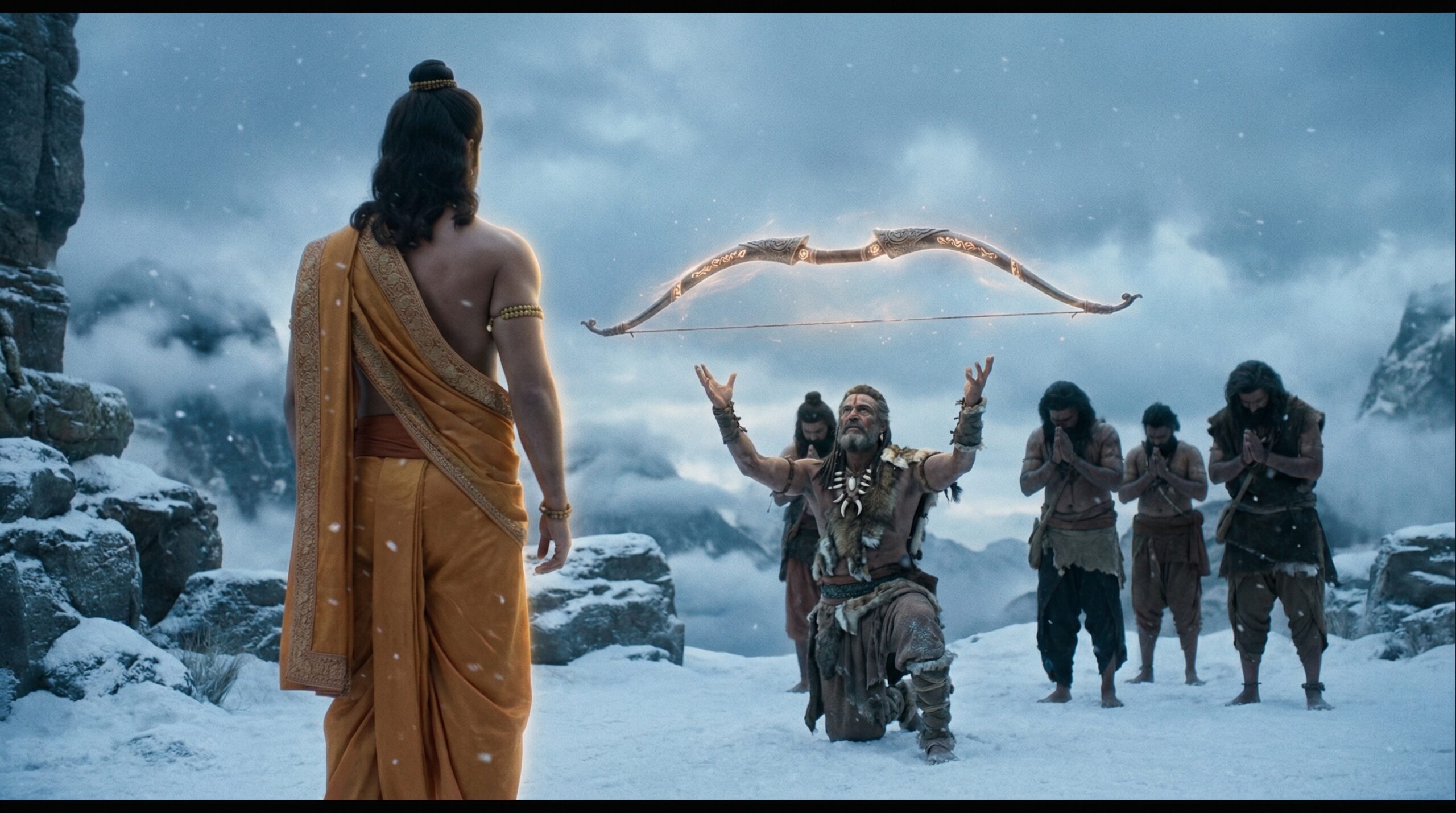
I wrote the trilogy because the epic ends with Ram’s departure but not with the answer to what became of his weapons. This is a story idea from the trilogy, not scripture. Weapon of Ram is a post-Ramayana mythological fantasy set in 3700 BCE. In it, the Aksha Mani are living stones made from the Kaustubha Mani, and they form a protection system that Ram created for his weapons. Five guardian tribes each hold a part of that system. Someone is hunting them, and the question the story asks is who controls the weapon that controls all weapons.
The books use the names Kodanda, Nandaka and Chandrahasa for three weapons, but the guardians and rules around them are original lore. The trilogy has Book 1 out now, and the FAQ lists Book 2 for Diwali 2026 and Book 3 for Diwali 2027. Read more on the Weapon of Ram book page, the FAQ and the story and characters post, or see how the sequel is planned in Raavan of Persia, Book 2.
If you enjoy the idea of stories that start where the epic stops, our guides to the best Indian mythology books and Indian mythology fiction list more places to go next.
After Ravana’s defeat, Ram is crowned king of Ayodhya. The Uttara Kanda then tells of Sita being sent away, the birth of Lava and Kusha, Sita returning to the earth, and Ram’s departure at the Sarayu river.
Tradition says yes, but many scholars see differences in language and style and think it was added later. Some hold that the original poem ended with the Yuddha Kanda. Both views exist.
In the Uttara Kanda, rumours among the people of Ayodhya led Ram to send Sita away, putting a king’s duty to his subjects first. Many readers and retellings question or soften this episode.
They are the twin sons of Ram and Sita, born at Valmiki’s ashram. Valmiki taught them the Ramayana, and they sang it before Ram at his Ashwamedha.
In the Uttara Kanda, Sita calls on the earth, her mother. The earth opens and takes her in. She is traditionally called the daughter of the earth because Janaka found her in a furrow.
As usually retold, Ram parts from Lakshmana to keep his word to Kala, the messenger of Time, and then enters the Sarayu river and returns to his form as Vishnu. Versions vary in the details.
The battle over the horse appears in later and regional retellings. In the Valmiki text, the twins recite the Ramayana at Ram’s Ashwamedha and Ram learns who they are.
Yes, as fiction. The Weapon of Ram trilogy imagines what became of Ram’s weapons in 3700 BCE. It is a story idea from the trilogy, not scripture.
Sources: the Valmiki Ramayana (Uttara Kanda), the Wikipedia article on the Uttara Kanda for the authorship debate, and Wikipedia on Luv Kush; trilogy facts from the Weapon of Ram book and FAQ pages.
Ready to Enter the World of Ram?