Weapon Chronicles
Which Bow Did Ram Break to Marry Sita? Shiva’s Bow, Kodanda and Vishnu’s Bow Explained
October 27, 2026
·
By Sunil Chandra Saha
·
8 min read
Ram broke Shiva’s bow, called Pinaka, at Sita’s swayamvar. See what Valmiki says, how Kodanda and Vishnu’s bow differ, and what later tales add.
Quick answer: At Sita’s swayamvar in Mithila, Ram broke the divine bow of Shiva, which tradition calls Pinaka. In the Valmiki Ramayana it was kept by King Janaka, and it snapped in the middle when Ram strung and drew it. It is not Kodanda, which is Ram’s own bow.
People mix up three bows when they talk about the Ramayana: the bow of Shiva that Ram broke, the bow of Vishnu that Parashurama carried, and Ram’s own bow, Kodanda. They appear in different places in the story, and they do different things. Here I untangle all three, and I keep what the Valmiki Ramayana says apart from what later retellings add.
It was Shiva’s bow. Janaka, the king of Mithila, tells Vishwamitra in Bala Kanda (sarga 66) that the bow came to his family from Devarata, a king of the line of Nimi, who held it as a sacred trust from Shiva. Janaka had also declared that Sita, whom he found in a furrow while ploughing, would be given only to a man who could lift and string it. Kings came, failed, and went home.
The name Pinaka is the one tradition uses for Shiva’s bow. The Valmiki passage itself speaks of it as Shiva’s divine bow, so when you see “Pinaka” in a retelling, it means this same bow.
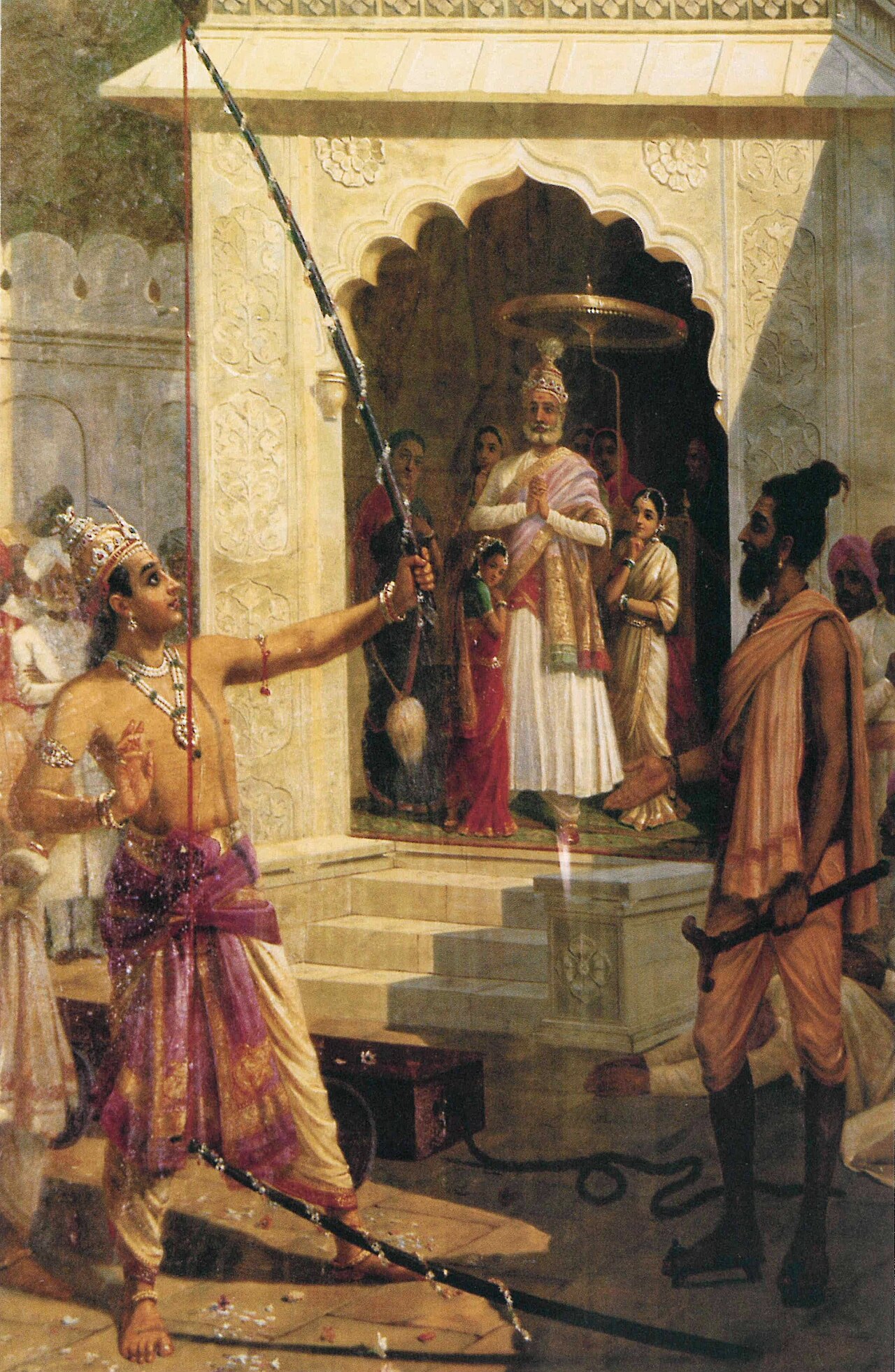
In Bala Kanda (sarga 67), Janaka has the bow brought out. It arrives in an iron casket on an eight-wheeled cart pulled by many strong men. Janaka says no god, demon or king has ever managed to string it.
At Vishwamitra’s urging, Ram opens the casket, asks leave to touch, lift and string the bow, and then does it with ease before the whole assembly. As he draws it, it snaps in the middle with a thunderous crash that shakes the earth. Almost everyone faints. Only Janaka, Vishwamitra and the two princes stay on their feet. Janaka then declares his vow fulfilled and sends messengers to Ayodhya to call Dasharatha. You can read the sarga at valmikiramayan.net.
I wrote about the contest from Sita’s side in the Sita swayamvar and Shiva Dhanush post.
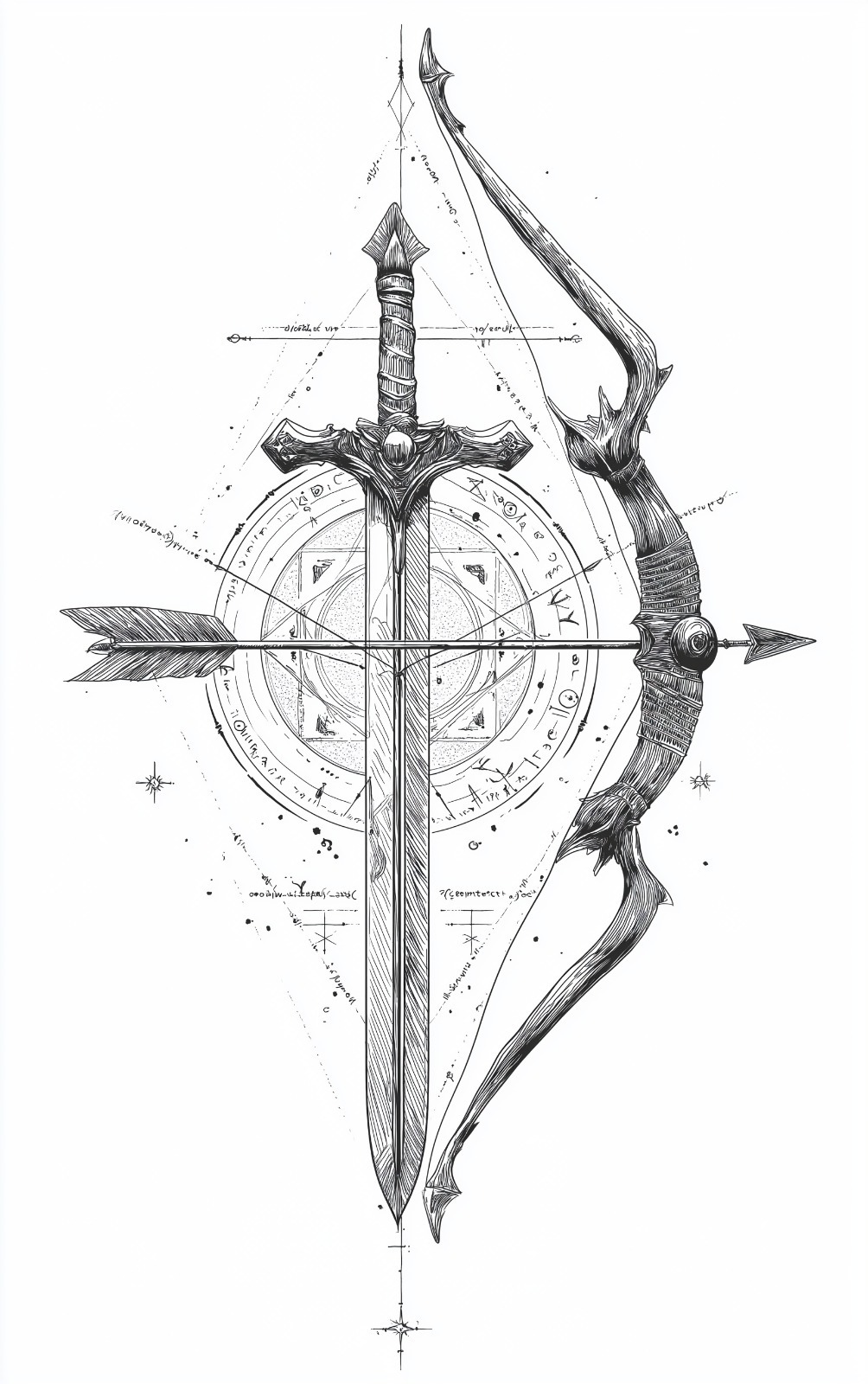
Kodanda is Ram’s own bow, the one tradition says he carried through exile and the war in Lanka. That is why devotees call him Kodandarama. It is a separate bow from the one he broke at Mithila, and it was not broken. For its powers and its story, see Kodanda, the divine bow of Ram. For where such weapons went after the war, see where Lord Ram’s weapons are now.
After the wedding party leaves Mithila, Parashurama meets them on the road in Bala Kanda (sarga 75). He has heard that Ram broke Shiva’s bow, and he carries a second bow, the Vaishnava bow, which he asks Ram to string. The text says Vishwakarma made it, that it passed to Vishnu and then down to Parashurama through his father’s line, and that it was as powerful as Shiva’s bow.
In the next sarga Ram takes the bow and arrow, strings it, and then gives Parashurama a choice about where the arrow should strike. Parashurama chooses his austerity-won worlds and leaves for Mahendra mountain. Later tradition links the name Sharanga with Vishnu’s bow. The Valmiki passage I have cited calls it the Vaishnava bow. I covered the meeting in Ram vs Parashurama.
| Bow | Belonged to | Where it appears | What happened |
|---|---|---|---|
| Shiva’s bow (Pinaka) | Shiva, then kept by Janaka’s family | Bala Kanda, Mithila | Ram strung it and it snapped at the swayamvar |
| Vaishnava bow (Sharanga in later tradition) | Vishnu, then Parashurama | Bala Kanda, on the road from Mithila | Ram strung it and Parashurama left |
| Kodanda | Ram | Exile and the war with Ravana, in tradition | Carried by Ram; its later fate is not given in the Ramayana |
This part is a story idea from the trilogy, not scripture. I wrote Weapon of Ram: Secret of the Aksha Mani as a post-Ramayana fantasy, built on one question: what became of Ram’s weapons, such as Kodanda and Nandaka, and why no king hunted them down after his death? In the books, Ram created the Aksha Mani System after Ravana’s fall. Without the stone, a weapon is inert, and the stones are guarded by five tribes. The tribes, the stones and characters like Dhruv, Tara and Darukh are original fiction inspired by the Ramayana.
You can read more on the Weapon of Ram book page and in the FAQ. Book 1 is out in print and on Kindle.
Ram broke the bow of Shiva. In the Valmiki Ramayana it is described as Shiva’s divine bow, and tradition and later retellings call it Pinaka. It snapped in the middle when Ram strung and drew it.
In Bala Kanda, Janaka says the bow came down to his family from Devarata, a king of the line of Nimi, who held it as a sacred trust from Shiva. It was kept in Mithila for generations.
The Valmiki account says Ram asked leave to lift and string the bow, then drew it with ease, and it broke in the middle with a thunderous sound. Later retellings add their own reasons, so it is best to keep the two apart.
Kodanda is the name tradition gives to Ram’s own bow, which is why he is called Kodandarama. It is a different bow from the one he broke at Mithila.
It was the Vaishnava bow, made by Vishwakarma and passed down to Parashurama. In Bala Kanda, Parashurama challenged Ram to string it. Ram strung it, and Parashurama left for Mahendra mountain.
Many retellings say she did, and that this is why Janaka made lifting the bow the condition for her hand. The Valmiki passage cited here records Janaka’s condition and the contest, so treat the child-lifting scene as a later retelling.
Sources: Valmiki Ramayana, Bala Kanda sarga 66, 67, 75 and 76 (as read on valmikiramayan.net and vedapath.app); Wikipedia, “Sita Swayamvara”; Ramcharitmanas for the devotional telling.
Ready to Enter the World of Ram?