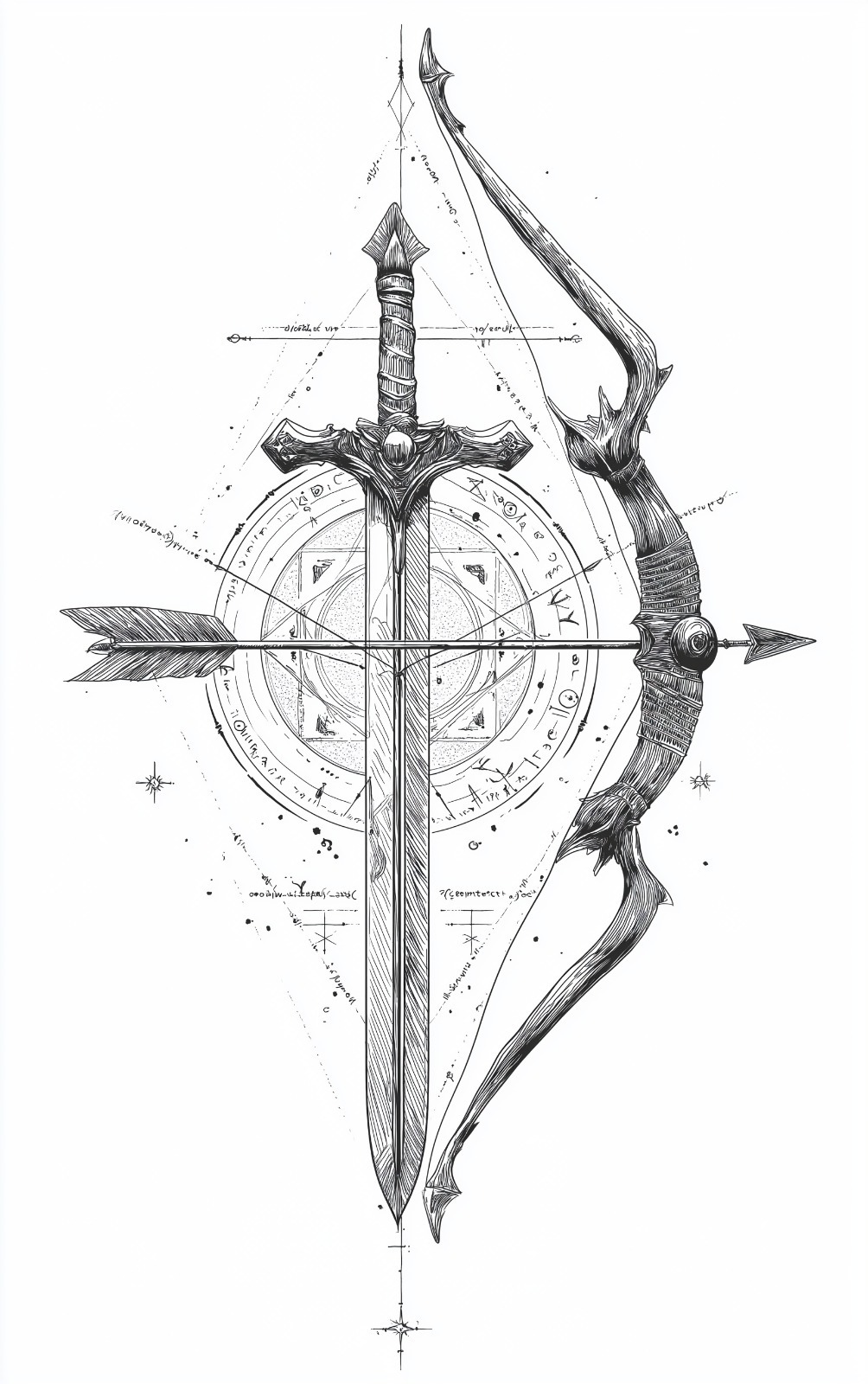
Weapon Chronicles
Where Are Lord Ram’s Weapons Now? Kodanda, Sharanga and the Astras After the Ramayana
October 25, 2026
·
By Sunil Chandra Saha
·
10 min read
Where are Lord Rama’s weapons now? What the Valmiki Ramayana says happened to Kodanda, Sharanga and the astras, and the legends and relics people point to.
Quick answer: Nobody can point to a place on earth where Lord Rama’s weapons are now. In the Valmiki Ramayana, Ram hands the bow he took from Parashurama to Varuna, and when he leaves the earth at the Sarayu, his bow, arrows and other weapons go with him in human form. Tradition after that places them with Vishnu, whose bow is Sharanga. Relics shown at local shrines are matters of local belief, not verified objects.
This question sits at the heart of the Weapon of Ram trilogy. People want to know if the bow that killed Ravana is buried somewhere, kept in a temple or lost. The honest answer starts with what the text says, so let us go there first and keep scripture, later tradition and my own story ideas clearly apart.
Ram did not have one weapon. He collected them in stages, and each came from a different giver. Here is the short version, with where each episode sits in the Valmiki Ramayana.
| Weapon | Who gave it | What the text says happened to it |
|---|---|---|
| The astras (divine missiles) | Sage Vishwamitra, Bala Kanda sargas 27 and 28 | The astras appear in embodied form and call themselves Ram’s servants. He asks them to come to his mind whenever he needs them. |
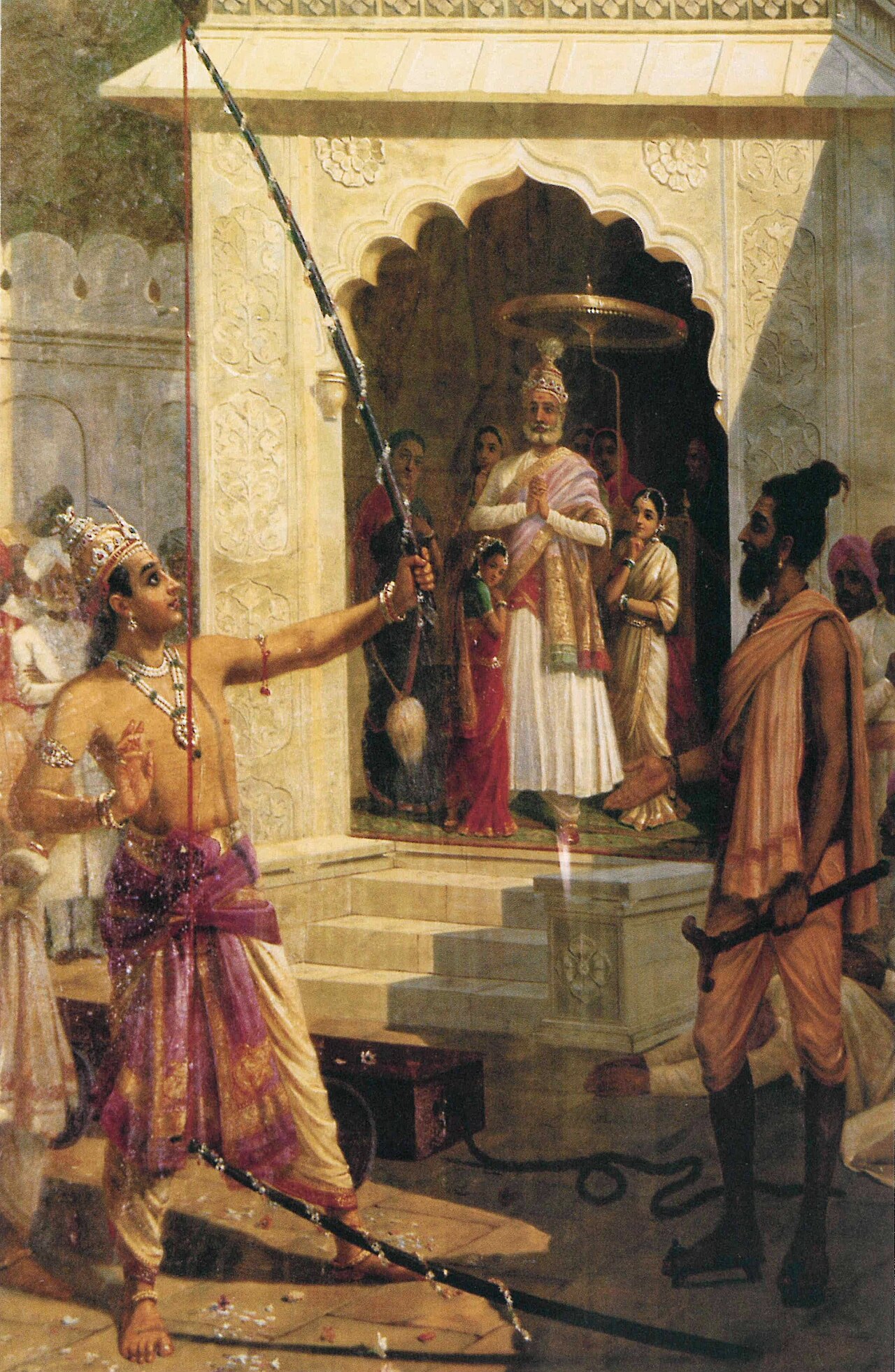
| Vishnu’s bow carried by Parashurama | Parashurama, near the end of the Bala Kanda | Ram strings it, wins the contest and, after Parashurama leaves, hands the bow and arrows to Varuna (Bala Kanda sarga 77). |
| A bow made by Vishwakarma, Brahma’s arrows, two inexhaustible quivers and a sword | Sage Agastya, Aranya Kanda sarga 12 | Ram carries these through the forest years and into the war. |
| The Brahma-made arrow that killed Ravana | Agastya, recalled in Yuddha Kanda sarga 108 | After killing Ravana it enters the earth and then returns to Ram’s quiver. |
| Every weapon, at the end | – | They accompany Ram, in human form, when he leaves the earth (Uttara Kanda). |
One bow is missing from this list on purpose. The great bow Ram broke at Sita’s swayamvar in Mithila belonged to Shiva, not Ram, and it did not survive the day. I have told that story in the Shiva Dhanush and Sita’s swayamvar and in why Parashurama came after Ram broke Pinaka.
Mostly, yes, in popular use. Kodanda simply means “bow”, and in South India it is the name people use for Ram’s bow, which is why he is worshipped as Kodandarama, “Ram with the bow”. Sharanga is the name of Vishnu’s own bow, and because Ram is Vishnu’s avatar, tradition often treats the two as one.
Valmiki himself mostly describes these weapons by their origin rather than by name. Parashurama tells Ram that Vishwakarma made two great bows, one given to Shiva and one to Vishnu, and that Vishnu’s bow passed down his own family to him. Agastya, years later, gives Ram another bow “crafted by Vishwakarma” and says Vishnu once used it to destroy demons. So even inside the epic there is more than one Vishnu bow. I go deeper into the name and its legends in Kodanda, the divine bow of Ram.
This is the part most people have never read. In the Uttara Kanda, after Sita returns to the earth and his work is done, Ram walks to the Sarayu river to return to his divine form. He walks dressed in linen with kusha grass in his hand, not armed for war. Bharata, Shatrughna, the citizens and the vanaras follow him.
And his weapons follow him too. In Hari Prasad Shastri’s translation of Uttara Kanda chapter 109, his “innumerable arrows, marvellous bow and all the other weapons”, assuming human form, accompanied him. The Vedas and the sacred syllable Om walk with him in embodied form as well.
That single line is the closest the epic comes to answering our question. The weapons were not left in Ayodhya, buried or handed to an heir. They went with Ram when he entered the Sarayu at the Gopratara tirtha and returned to Vishnu.
Once the epic ends, the trail moves into the Puranas, devotional texts and temple culture. These are later layers, and they do not always agree, but four answers come up again and again.
The most common traditional answer is that Ram’s bow is simply Vishnu’s bow, Sharanga, and it is with him. Sharanga is named in the Vishnu Sahasranama, and Vishnu is praised as Sharangapani, “the one who holds Sharanga”. In this view the bow never needed a hiding place.
If you follow Valmiki strictly, the bow Ram won from Parashurama was handed to Varuna, the lord of the waters, right after that contest. The text does not say Varuna ever gave it back.
In the Mahabharata and the Vishnu Purana, Krishna, another avatar of Vishnu, carries Sharanga. Devotional tradition reads this as the same bow returning with the next avatar. That is a reading of the texts, not a line in the Ramayana.
The astras Vishwamitra gave Ram were not arrows kept in a box. In Bala Kanda sarga 27 they appear before him as beings, and he tells them to be present in his mind when he calls. An astra was knowledge and power invoked through mantra and loaded onto an ordinary arrow. You cannot dig up a mantra. I explain how that worked in Vishwamitra’s divine weapons for Ram and Lakshman and in Valmiki’s magic system of the Ramayana.
There is no verified physical evidence of any of them. What exists are local traditions, and they deserve respect as faith rather than as history.
If someone shows you “Ram’s real bow” for sale or in a viral video, treat it with care. The texts send the weapons back with Ram, not into a collector’s cabinet.
This gap between the last line of the epic and the silence after it is exactly where my story lives. Weapon of Ram is a mythology-inspired fantasy set around 3700 BCE, after the Ramayana. It is inspired by the epic, not a retelling of it, and not scripture.
In the trilogy, after Shiva’s sword Chandrahasa passes to Ravana, Ram builds a protective system for the divine weapons: the Aksha Mani, five living stones, each bonded to one of five tribes. In the book, Kodanda is hidden in the glaciers near Kailash, and Dhruv, the last Shastradhari of the Mountain Tribe, is its guardian. This is a story idea from the trilogy, not scripture. The names come from tradition; the tribes, guardians and rules are mine.
Book 1, Weapon of Ram: Secret of the Aksha Mani Tribes, is out now in print and on Kindle. Book 2, Raavan of Persia, is due for Diwali 2026. The Weapon of Ram FAQ answers what is tradition and what is fiction in the books.
No one knows of a physical location. In the Valmiki Ramayana, Ram’s bow, arrows and other weapons go with him in human form when he leaves the earth at the Sarayu, and tradition places them with Vishnu.
The Uttara Kanda says his bow accompanied him, in human form, on his final journey. Separately, the Bala Kanda says Ram gave the bow he won from Parashurama to Varuna.
In popular tradition, yes. Kodanda means bow and is the South Indian name for Ram’s bow, while Sharanga is Vishnu’s bow; since Ram is Vishnu’s avatar, the two are often treated as one.
Krishna carries Sharanga in the Mahabharata and the Vishnu Purana. Devotees read this as Vishnu’s bow returning with a later avatar, but the Ramayana itself does not say so.
Ram killed Ravana with an arrow made by Brahma that Agastya had given him. In Yuddha Kanda sarga 108 the arrow enters the earth and then returns to Ram’s quiver.
At Phulhar in Madhubani, a metal object is revered locally as Ram’s arrow. It is a matter of local faith; the object has not been tested or verified.
In the trilogy, Kodanda is hidden in the glaciers near Kailash and guarded by Dhruv of the Mountain Tribe. This is a story idea from the books, not scripture.
Sources: Valmiki Ramayana translations at valmikiramayan.net (Bala Kanda 27, Aranya Kanda 12, Yuddha Kanda 108) and kasarabada.org (Bala Kanda 77); Uttara Kanda chapter 109, tr. Hari Prasad Shastri, via wisdomlib.org; Wikipedia articles on Sharanga and Lord Rama’s Arrow, Pushpavatika.
Ready to Enter the World of Ram?