Ranbir & Yash Starrer – Namit Malhotra’s Ramayana – The ₹4,000 Crore Bet That Indian Stories Belong to the West and China market. Can Weapon Of Ram be next of DNEG’s?
May 12, 2026·By Sunil Chandra Saha·10 min read
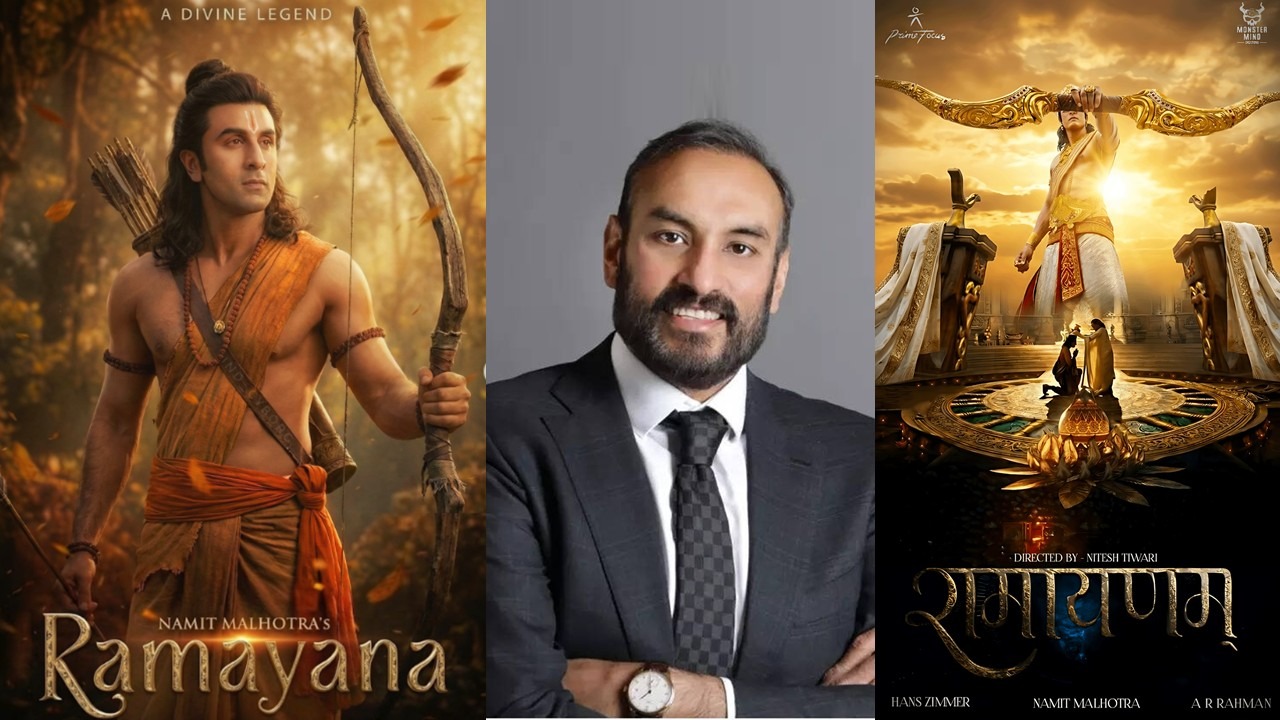
Namit MalhotraRamayana movie is all set to present the western world, the Ramayan. Ambition, controversy, and the most audacious cinematic wager in Indian film history by the great team of DNEG artists and lead by Ranbir Kapoor and Yash.
There is a certain kind of audacity that doesn’t announce itself with a press release. It announces itself with a budget. And when Namit Malhotra – founder of Prime Focus, chairman and CEO of eight-time Oscar-winning VFX studio DNEG – confirmed that the combined investment across both parts of his Ramayana adaptation would swell to ₹4,000 crore, the number landed less like a figure and more like a declaration. This wasn’t just a film being made. This was a statement about what Indian stories deserve.
The question India’s film industry is now sitting with, as Diwali 2026 approaches, is a deceptively simple one: does the film live up to it?
To understand Ramayana movie, you first have to understand Namit Malhotra, because the two are philosophically inseparable.
One can easily ask – what makes a great action adventure movie like MARVEL’S AVENGER’S END GAME – a cast, a visionary director, motivation which is beyond money and a storyline where there is love, emotion, drama, action and a villain who can make everything worth. Ramayan is exactly that and ten times more.
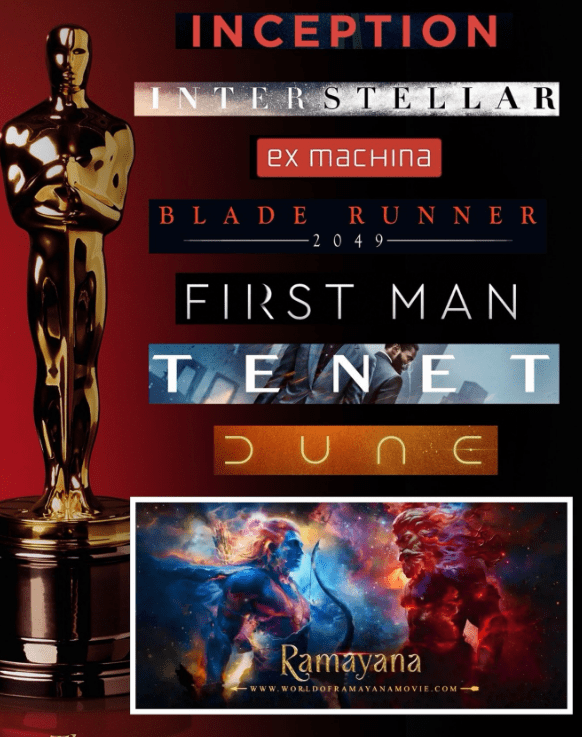
Malhotra founded Prime Focus in 1997 and spent the following decades building it into a global technology and creative services powerhouse, eventually merging it with London-based Double Negative (DNEG) in 2014 to create the VFX studio that would go on to win Academy Awards for films like Ex Machina, Blade Runner 2049, First Man, Tenet, and both Dune films. His career, in other words, has been a long apprenticeship in exactly the kind of large-format spectacle that Ramayana demands.
His producing credits straddle East and West – from Brahmastra to The Garfield Movie – but Ramayana is clearly different in nature. This isn’t a side project or a strategic IP bet. It reads, in everything Malhotra has said publicly, like a calling.
Speaking at the film’s global title launch, Malhotra said: “This is a cultural movement for every Indian around the world. With Ramayana, we’re not just retelling history; we’re introducing our legacy to the world.” It’s the kind of line that courts scrutiny – but given everything staked on the production, it also carries the weight of genuine conviction.
The Cast They Assembled
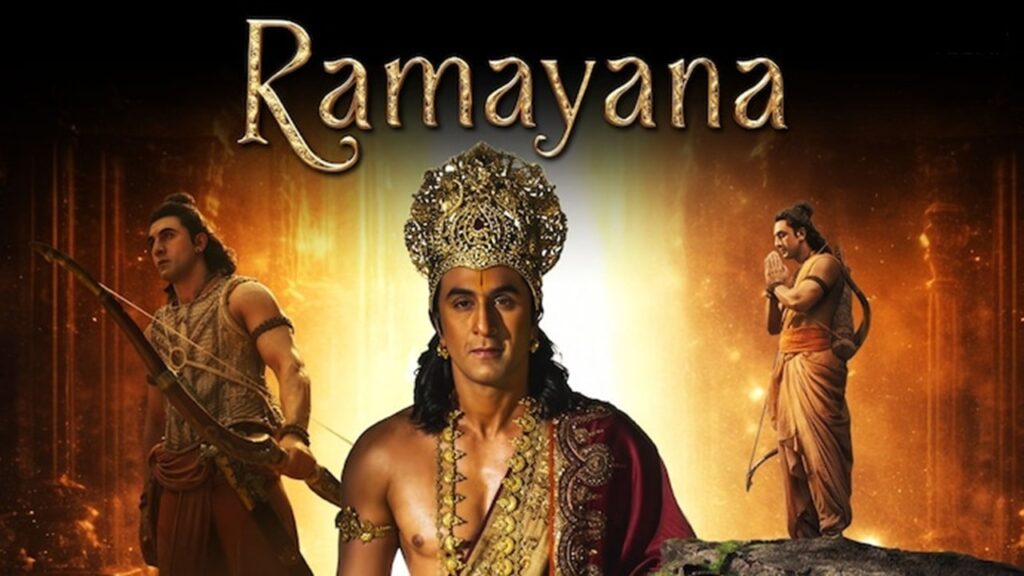
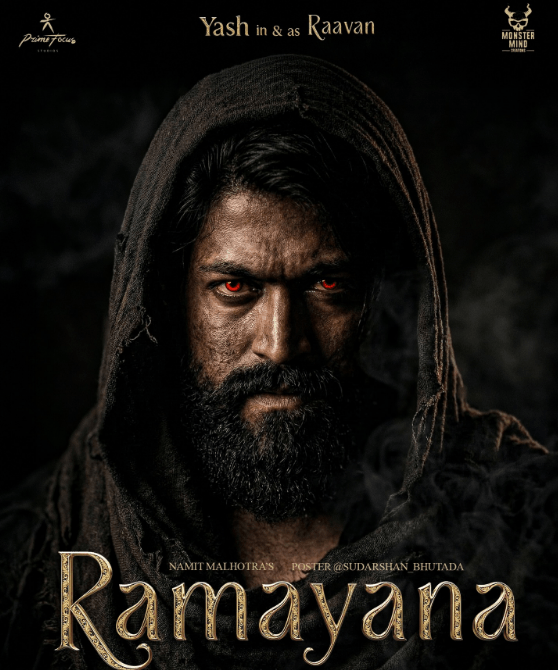
Ranbir Kapoor plays Lord Rama. Sai Pallavi is Sita. KGF superstar Yash steps into the imposing role of Ravana – a role he co-produces alongside. Sunny Deol portrays Hanuman. Ravi Dubey plays Lakshman. The supporting ensemble spans Lara Dutta as Kaikeyi, Arun Govil – the original Ram from Ramanand Sagar’s iconic television serial – as King Dashrath, Rakul Preet Singh as Surpanakha, and Kajal Aggarwal as Mandodari.
On paper, it’s a cast that attempts to bridge Bollywood’s prestige sensibility with pan-India commercial appeal. Ranbir brings depth and box office credibility. Yash, whose KGF franchise redrew the map of what Indian mass cinema could achieve internationally, serves as the film’s most potent calling card for non-Bollywood and overseas audiences. Casting him as Ravana rather than a supporting deity is, arguably, the most intelligent strategic decision in the entire production – it signals immediately that this isn’t a devotional retelling but a full dramatic epic, with a villain worthy of the hero.
Yash himself was clear about why he said yes. Describing Ravana, he said the character had more shades and nuance than almost any role he’d encountered – that there was vast scope to present it differently. For an actor who built a career playing morally complex anti-heroes, it’s the sort of fit that feels almost inevitable.
DNEG has won 7 OSCARS so far. So one thing is for sure- the movie is in good experienced hands.
The Music No One Expected
If the casting is the film’s dramatic gamble, the music is its artistic masterstroke. Ramayana marks the first collaboration between Oscar-winning composers A.R. Rahman and Hans Zimmer – a pairing so unlikely, and yet so obviously right, that it still seems faintly surreal.
Rahman, speaking about the early stages of the collaboration, described the beginnings as “beautiful.” Zimmer, for his part, is making his first foray into Indian cinema – and doing so on perhaps the most mythologically loaded story the subcontinent has ever produced. The combination of Zimmer’s sweeping orchestral architecture with Rahman’s instinctive grasp of Indian classical and devotional tonality is the one element of Ramayana‘s pre-release material that has drawn near-universal praise. Whatever reservations audiences have held about the visuals, the score has been consistently described as transcendent.
It is telling that Malhotra chose music as one of the earliest things to reveal. He understands, it seems, that emotion arrives before spectacle – and that in a story this sacred to so many, the first thing audiences need to feel is that the makers understand what they’re handling.
The Controversy That Came With the Teaser
Then came April 2, 2026, and the teaser – and with it, a reckoning.
When the first footage was unveiled, what audiences expected was grandeur. What some received, they felt, was a work in progress. Criticism spread quickly: the demon designs were called generic, drawing comparisons to video game characters and even the creature designs from The Hobbit. Certain visual sequences were described as looking AI-generated, and the budget – ₹4,000 crore – became a flashpoint, with some on social media questioning how such an investment could yield effects that felt unfinished. Others were simply unconvinced by Ranbir Kapoor’s physical embodiment of Ram.
Malhotra acknowledged the storm directly. In a public statement, he wrote: “This is a story etched in the souls of billions and deserves our utmost care. The many thousands of artists and collaborators who have been working away passionately are enthusiastic and energized to get out there and continue to deliver the absolute best in every department. We’re listening closely, working diligently, and pouring every effort possible into honoring it with the reverence it holds.”
It was a response that walked a difficult line – neither defensive nor dismissive – and it landed better than it might have. Partly because it came from someone whose credentials in VFX are genuinely unimpeachable. Malhotra’s own studio DNEG, which has eight Academy Awards for visual effects to its name, is responsible for the film’s VFX – which means the early teaser footage almost certainly was not representative of the final product. Studios at this scale routinely release footage months before the VFX is locked. The tease was always meant to build awareness, not close the argument.
The music, crucially, was not in question. And for a film whose soul lives in its emotional register, that matters more than it might seem.
The Theatre Strategy
The film is a two-part production, with Part 1 targeting Diwali 2026 and Part 2 slated for Diwali 2027. Diwali, as a release window, is not chosen arbitrarily – it is the single most commercially potent period in the Indian box office calendar, carrying both festive footfall and emotional resonance for precisely the kind of mythological storytelling Ramayana represents.
But Malhotra is not playing to the domestic gallery alone. The production has been pursuing IMAX commitments in North America, the UK, and beyond – understanding that a ₹4,000 crore investment cannot be recouped on domestic goodwill alone. The film made a significant appearance at CinemaCon 2026, where Yash served as the on-ground ambassador – a calculated move that underlines the cross-cultural ambitions of the project. IMAX’s own Chief Content Officer described the film as the most anticipated global release of the year.
Malhotra has spoken about how the story lands even with American audiences encountering it for the first time: “They said it feels like you’re bringing them one of the earliest stories of the world or the universe – something they don’t know much about. So it’s almost like presenting a timeless story that they are discovering for the first time.” That sense of discovery, rather than familiarity, is precisely the opening that Western markets rarely offer Indian cinema. Ramayana may be the first Indian film positioned to walk through it at genuine scale.
While a lot still depend on how China opens up for this movie. Ne Zha 2 has done wonders in animation and may be China is opening up to a story of Warrior Prince, as the market is still closed for any religious story telling.
Why This Story, Why Now
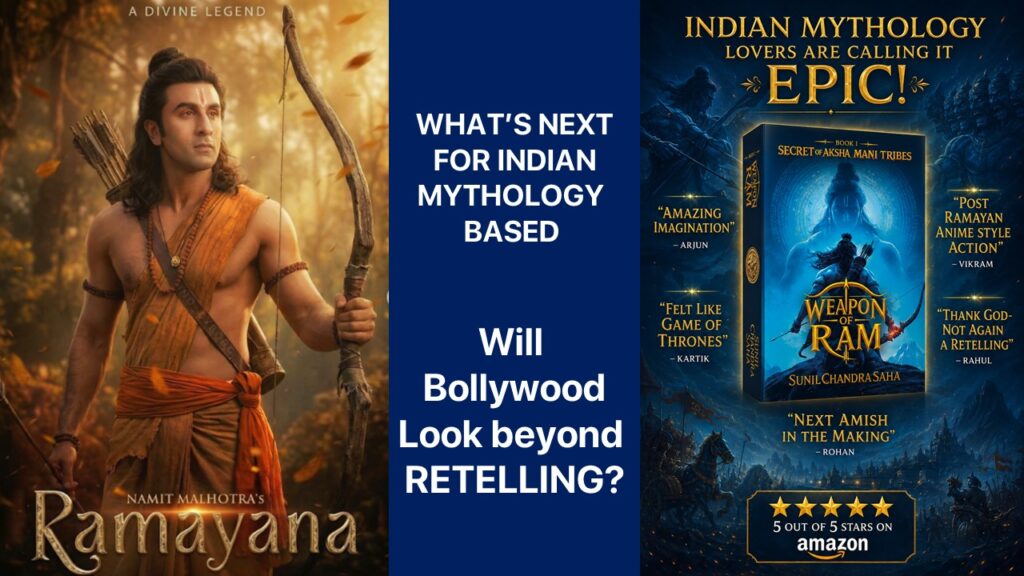
Interestingly, enough- there is another Ramayan based – book trilogy which is taking shape as the deal happens- Weapon Of Ram.
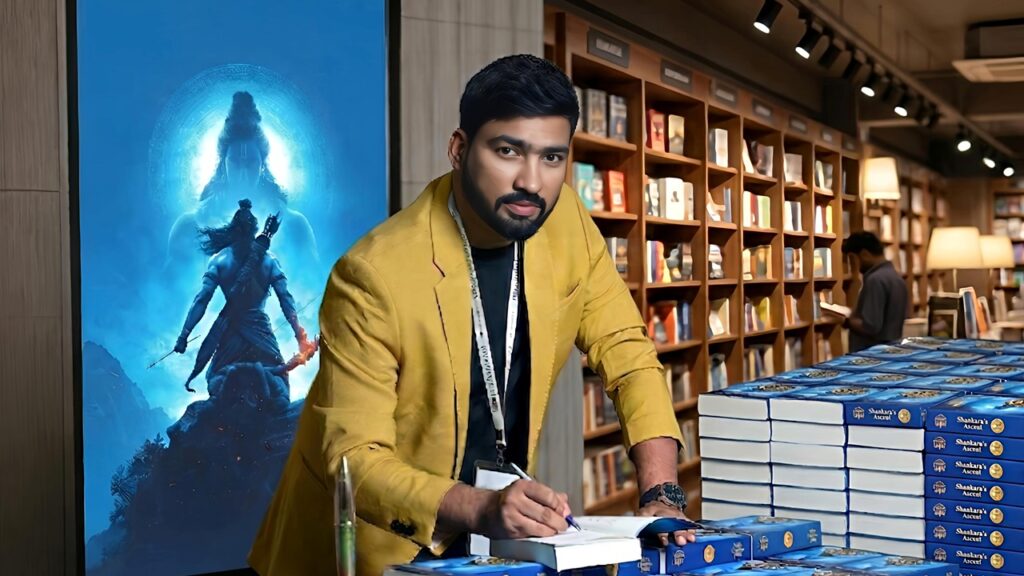
The book Weapon of Ram is a trilogy based on post Ramayana movie Fantasy, which travels from Tibet to Persia and Egypt. The story which blends ancient politics and some of fictionalised Lord Ram’s decision as Warrior prince, tussle for power and new inventions in weapon technology and divine weapon exports, written by Sunil Chandra Saha. In case Namit Malhotra’s massive impossible looking ambition comes to life, he may look forward to continue the path with fresh new stories linked to Ramayan, beyond pure Ramayana retelling. The story of Weapons and their transfer over 7 centuries as they are chased by kingdoms can be an interesting take for Chinese Market and also West seeing the success of Blue Eye Samurai, and even modern anime.
Malhotra’s case for the film’s timeliness is worth pausing on. He has argued that the Ramayana’s philosophical architecture – its exploration of duty, loyalty, sacrifice, and the cost of moral choices – speaks directly to a world fractured by conflict and division. “These philosophies, when presented in the right way and without being preachy, can actually bring people together in a very powerful manner,” he has said.
This is not the language of a producer doing damage control. It is the language of someone who believes, with some conviction, that the story he is telling matters beyond its commercial implications. Whether the film ultimately delivers on that belief is something only the final cut will answer. But the intent, at least, reads as genuine.
What differentiates Ramayana from most mythological adaptations is that it is not being expanded to fit cinematic expectations – it is being translated into a visual format capable of matching the story’s inherent scope. The narrative already spans kingdoms, forests, and cosmic battles. Its emotional weight has sustained generations of retelling. The question was never whether the story could hold a cinema screen. The question was whether anyone would invest enough to find out.
Namit Malhotra has answered that question with ₹4,000 crore, two Diwalis, IMAX screens on three continents, and the most storied musical collaboration Indian cinema has ever commissioned.
The music has soared. And the film itself, arriving in November, will settle what all the arguments cannot. What’s undeniable, regardless of how that verdict falls, is what the investment itself represents: a conviction that Indian stories do not need to shrink to reach the world. They need only to be told at the scale they were always meant for.