2026
Durga’s 10 Weapons: Who Gave Them, What They Mean and Where They Are Now (Durga Puja and Dussehra)
October 23, 2026
·
By Sunil Chandra Saha
·
7 min read
Maa Durga’s 10 weapons, who gave each one and what it means — plus a Dussehra theory on where they are now, from Weapon of Ram author Sunil Chandra Saha.
Quick answer: Maa Durga’s 10 weapons were gifts from the gods, handed over so she could defeat the buffalo-demon Mahishasura. Shiva gave the trishul, Vishnu the Sudarshan Chakra, Indra the vajra, and seven more gods added the rest. This Durga Puja and Dussehra guide lists each weapon, its giver and its meaning — then asks where these weapons are today.
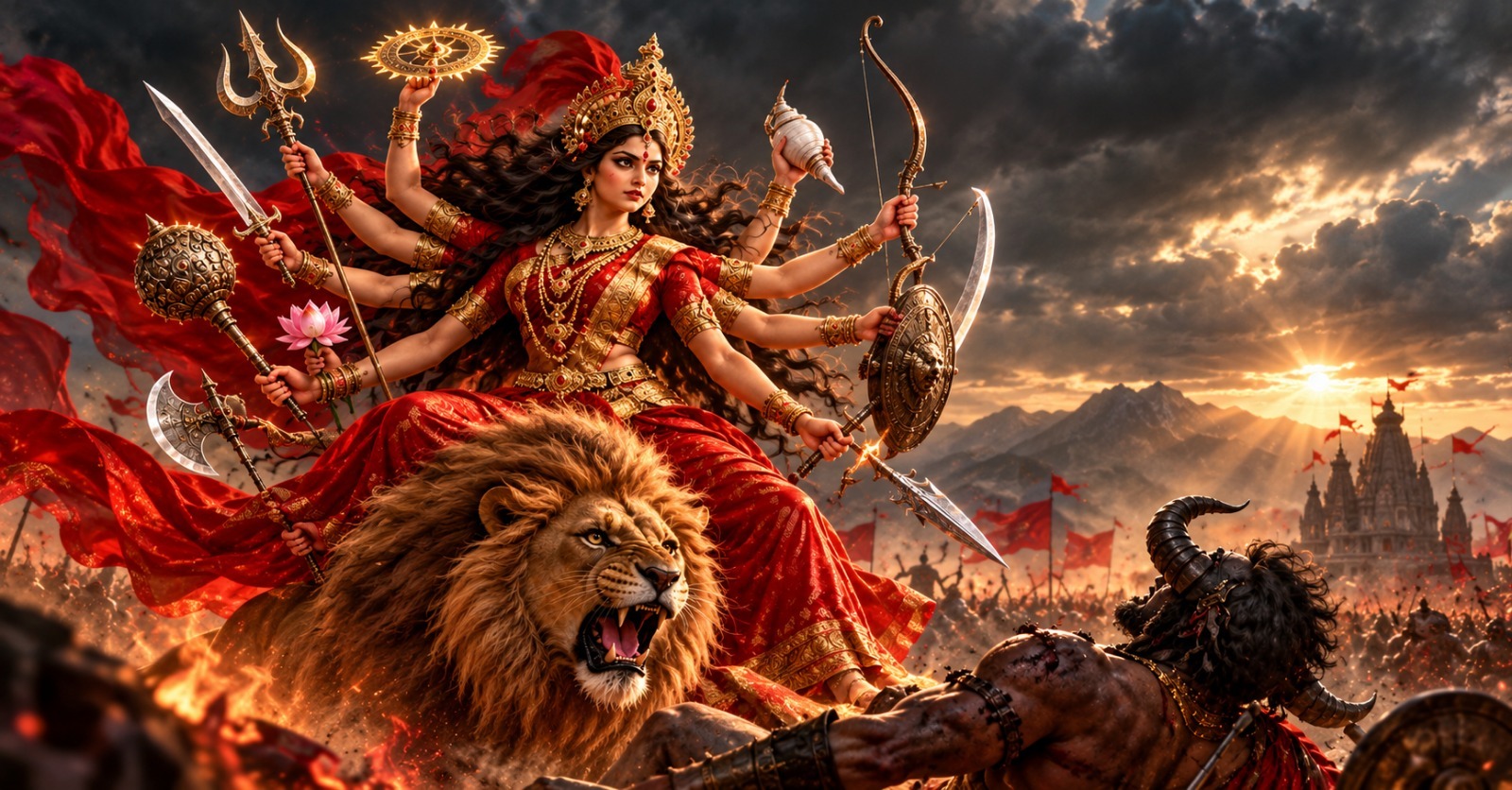
Mahishasura had a boon from Brahma: no man or god could kill him. The gods lost war after war and were thrown out of heaven. Their fix was not a better army. They pooled their anger, and that light took the shape of a woman. Then each one handed over the one thing he was best known for.
That is the point. The goddess was assembled from their failures, and every weapon is a god’s best asset transferred to someone else.
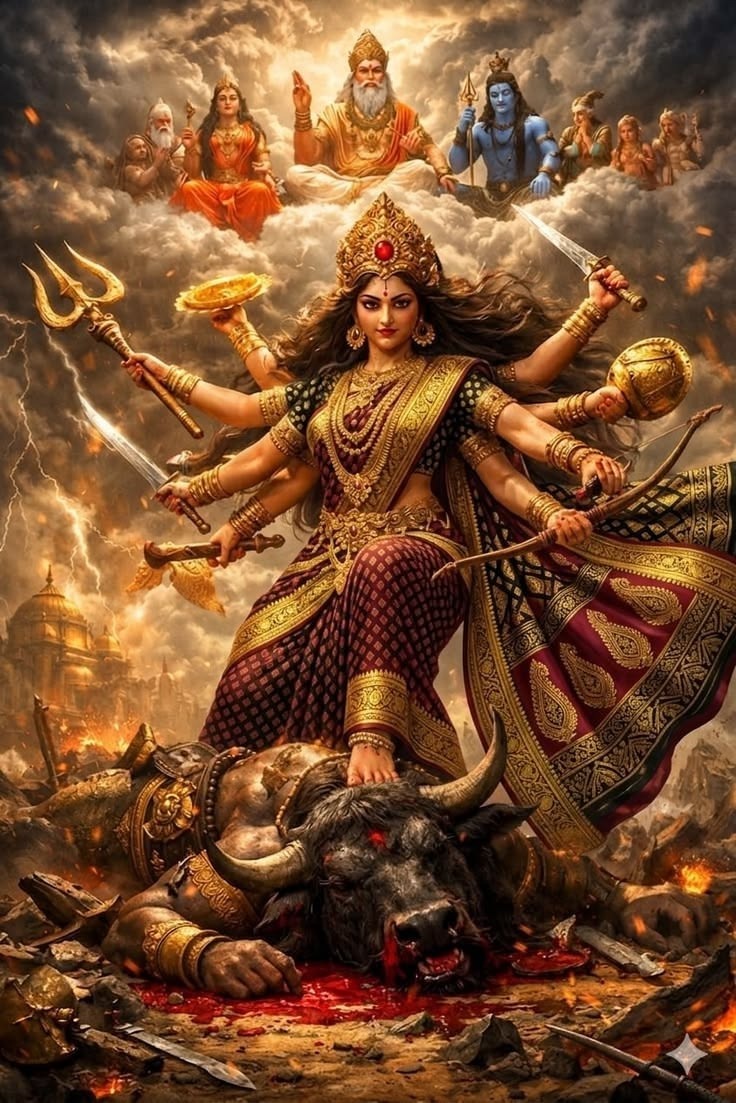
Texts and regions vary on the exact list. This is the list most commonly seen in iconography.
| # | Weapon | Given by | What it stands for |
|---|---|---|---|
| 1 | Trishul (trident) | Shiva | Destroys the three gunas — sattva, rajas, tamas. The weapon that kills Mahishasura. |
| 2 | Sudarshan Chakra (discus) | Vishnu | Time and dharma in motion. It returns to the hand. |
| 3 | Shankha (conch) | Varuna | Sound as a weapon. Its call opens the battle. |
| 4 | Shakti (spear) | Agni | Fire made solid: it pierces and burns. |
| 5 | Bow and arrows | Vayu and Surya | Range — speed from Vayu, reach and light from Surya. |
| 6 | Vajra (thunderbolt) | Indra | Unbreakable will. Forged from the sage Dadhichi’s bones. |
| 7 | Gada (mace) | Kubera | Raw force, backed by his wealth. |
| 8 | Sword and shield | Kala (Time) | Knowledge as an edge, with protection. |
| 9 | Axe (parashu) | Vishwakarma | A craftsman’s cutting tool. He also made her armour. |
| 10 | Lotus (padma) | Brahma | Creation and purity. In the Devi Mahatmya itself, Brahma gives a rosary and a kamandalu. |
She also received the lion from Himavan, a staff from Yama and a noose from Varuna.
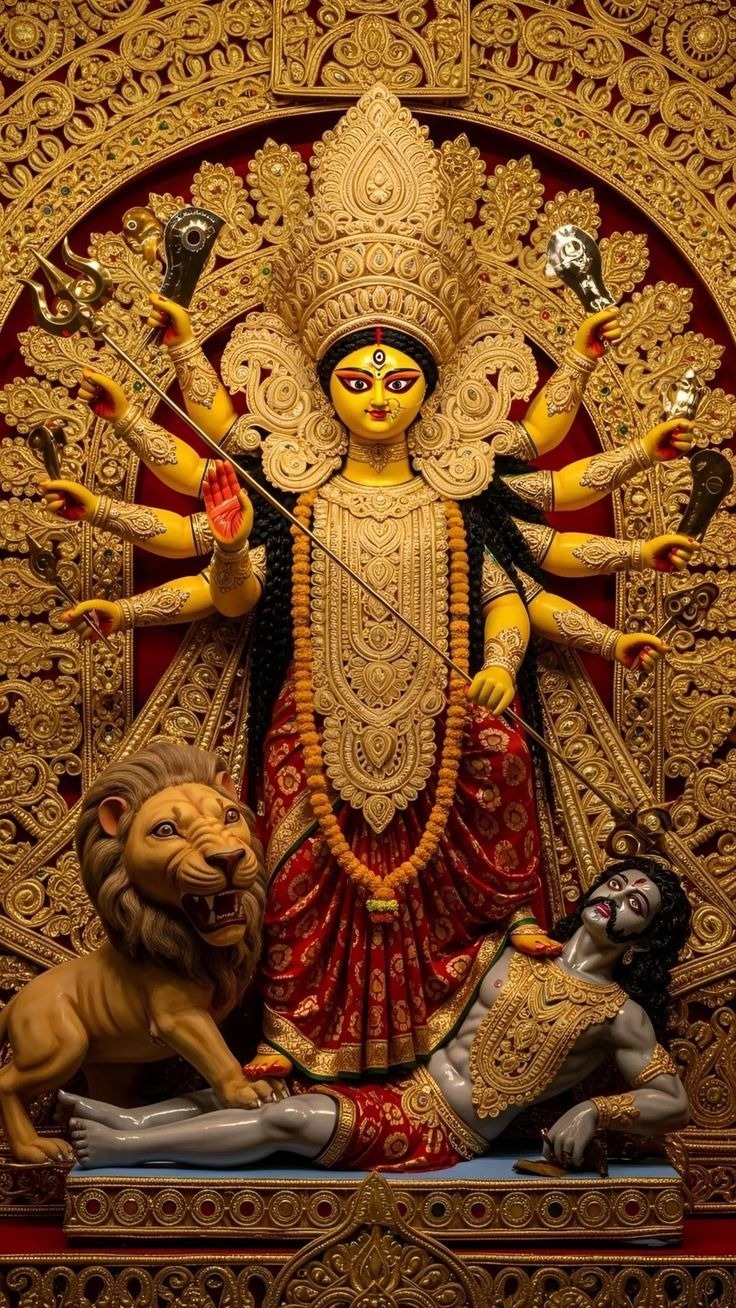
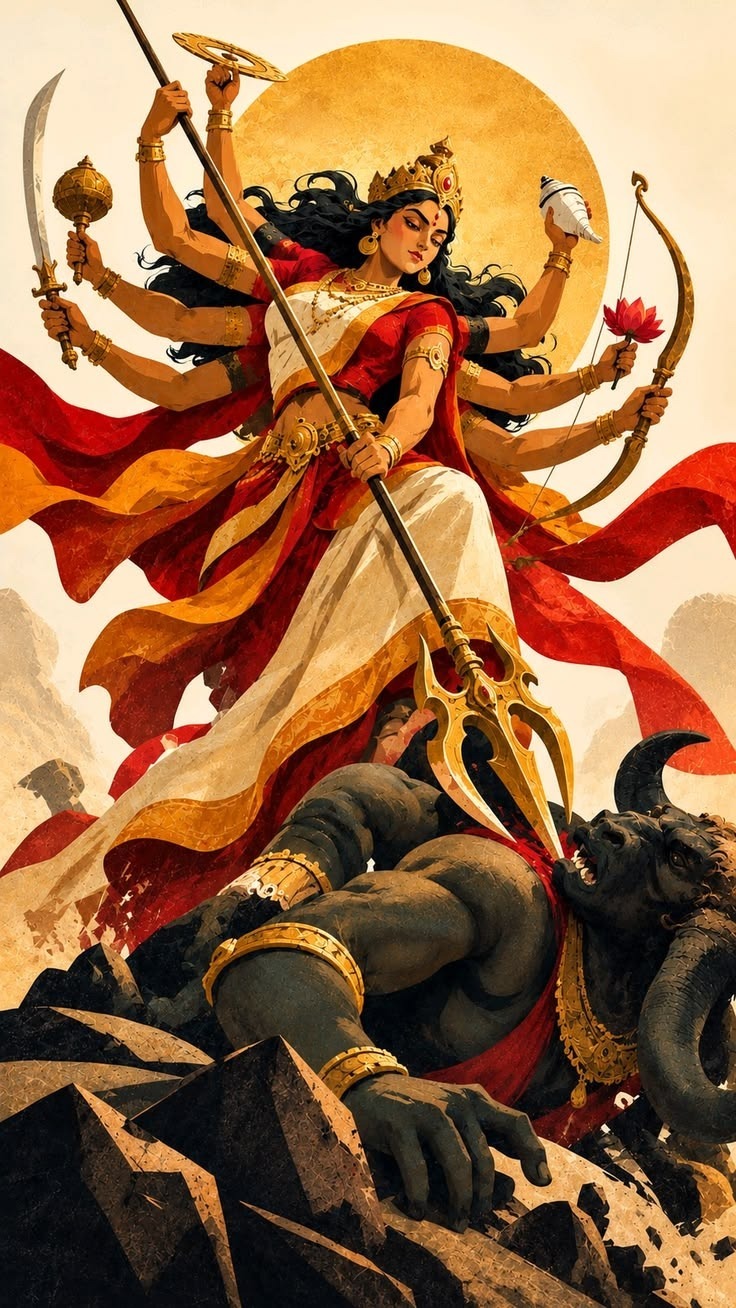
In Bengal, the tenth day marks Durga’s victory. In most of North India, the tenth day marks Rama killing Ravana. The two stories meet in the Bengali Krittivasi Ramayana, where Rama worships Durga before the war — an untimely invocation known as Akal Bodhan. In that telling, Rama needs her blessing to face Ravana.
Ravana is not a fool in these stories. He is a scholar, a devotee of Shiva and a brilliant fighter. He holds Shiva’s sword, Chandrahasa. The man who loses is the one who was most gifted and trusted that gift to be enough.
In scripture, Durga returns the weapons once the battle is won. The text does not say where they go. That gap is where my trilogy begins.
I am Sunil Chandra Saha, and I write the Weapon of Ram trilogy. It follows the hidden weapons of Ram — Kodanda, Nandaka and Chandrahasa — and it asks whether they were part of a wider set of divine weapons that already existed on earth.
One theory in the series goes further: the ten weapons of Durga crossed dimensions and now sit on the earth plane. This is a story theory, not scripture. The books follow what happens when divine weapons are found, hunted and used by people who never made the original bargain.
Weapon of Ram is a post-Ramayana fantasy trilogy by Sunil Chandra Saha. Book 2, Raavan of Persia, features Nandaka, Vishnu’s sword, and Chandrahasa, Ravana’s sword. Both were given for a purpose, and both are now in hands that never made that bargain. If you like mythology, Ramayana retellings and Indian fantasy, start with Book 1: Secret of Aksha Mani Tribes or read the trilogy FAQ.
Most Durga Puja idols show ten arms holding ten weapons. Texts and regions vary on the exact list.
The gods did: Shiva (trishul), Vishnu (Sudarshan Chakra), Indra (vajra), Agni (shakti), Varuna (conch), Vayu and Surya (bow and arrows), Kubera (mace), Kala (sword and shield), Vishwakarma (axe) and Brahma (lotus).
They could not defeat Mahishasura, who held a boon that no man or god could kill him. Their combined anger took the form of Durga, and each god armed her with his own weapon.
Traditionally the trishul, given by Shiva, delivers the final blow.
Durga Puja runs through the nine nights of Navratri and ends on Vijayadashami, the tenth day. Dates change every year, so check a current Hindu calendar.
Sources: Devi Mahatmya (Durga Saptashati, Markandeya Purana); the Krittivasi Ramayana for the Akal Bodhan tradition. Lists of the ten weapons vary by region and text.
Ready to Enter the World of Ram?