Ramayana Series
Where Is Chandrahasa Sword Now? Ravana’s Lost Blade
October 3, 2026
·
By Sunil Chandra Saha
·
11 min read
Quick answer: Nobody knows where the Chandrahasa sword is now. No verse of the Valmiki Ramayana says what happened to Ravana’s sword after he died in Lanka, and no temple claims to hold it. Below is what the texts do say about Chandrahasa and the main theories about where Shiva’s sword went.
The war in Lanka is over. Ravana lies dead on the battlefield, struck down by Ram’s arrow. His crown has fallen. His chariot is broken. But one question has stayed with readers for thousands of years: what happened to the sword Lord Shiva gave him?
Chandrahasa was no ordinary blade. It was a gift from Mahadev himself, given to the king of Lanka after one of the most famous moments in the Ramayana. Yet after Ravana’s death, the sword simply disappears from the story. No verse tells us who picked it up. No temple claims to hold it.
So where is the Chandrahasa sword now? In this article, we look at what the texts actually say, what later traditions believe, and why the trail goes cold.
The story is told in the Uttara Kanda, the final book of the Valmiki Ramayana. Many scholars consider this book a later addition to the epic, but its stories are deeply loved and widely retold.
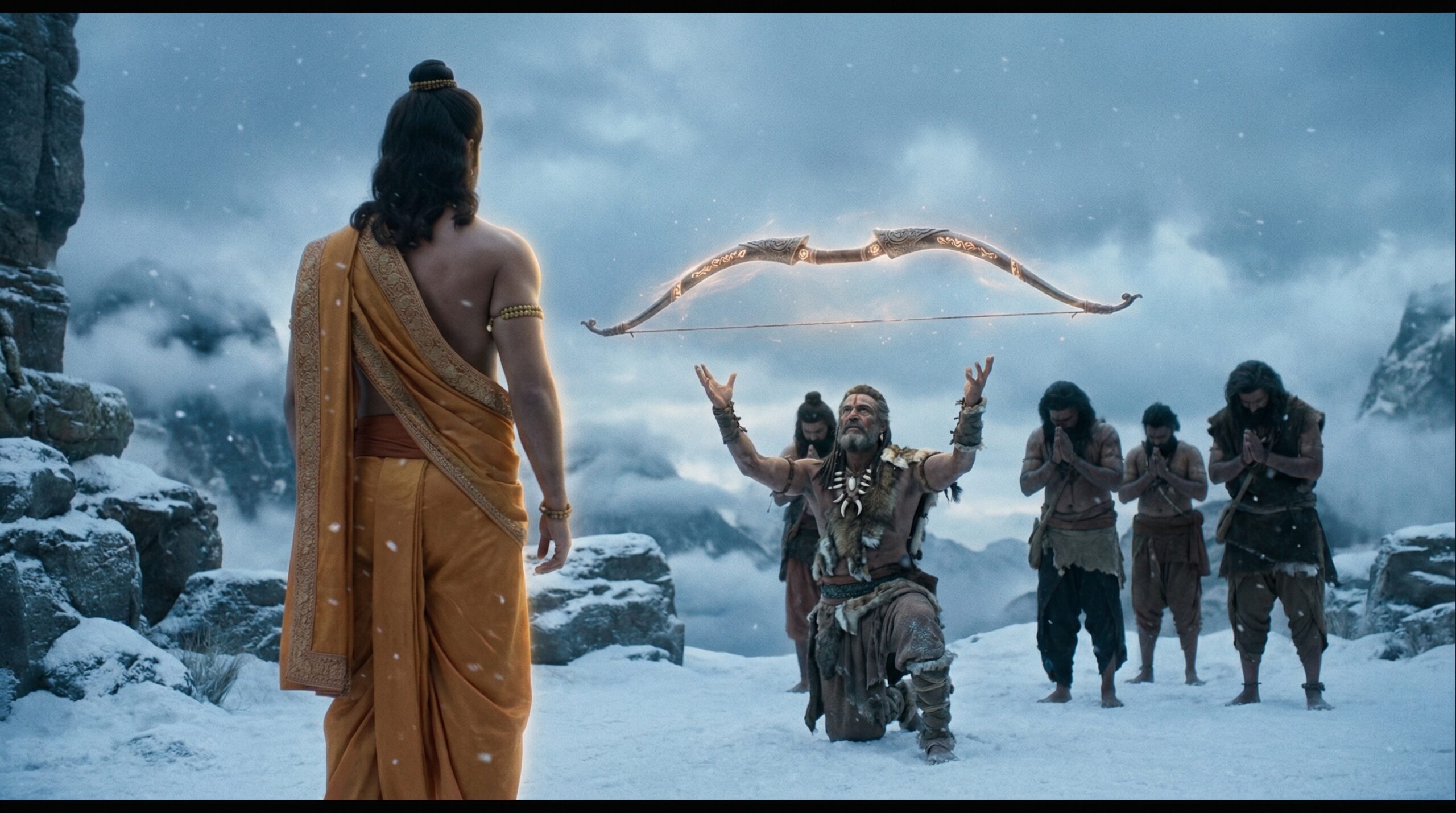
Ravana, proud after defeating his half-brother Kubera and taking the Pushpaka Vimana, was flying over the Himalayas. Near Mount Kailasa, his aerial chariot suddenly stopped. It could not move forward. Angry, Ravana decided to lift the entire mountain and move it out of his way.
As he raised Kailasa with his twenty arms, the mountain shook. Shiva, seated on the peak, simply pressed down with his toe. The mountain settled back, and Ravana’s arms were trapped beneath it. In pain, he cried out so loudly that the worlds trembled.
Then Ravana did something unexpected. Instead of fighting, he began to praise Shiva. The texts say he sang hymns to Mahadev for a very long time. Pleased by this devotion, Shiva released him. He gave him the name Ravana, often explained as “the one who roars” or “the one who makes others cry”, because of the great cry he let out. And along with the name, Shiva gave him a divine sword: Chandrahasa.
Some versions of the story add a warning. The sword would serve Ravana, but if he ever treated it with disrespect or used it for an unjust cause, it would return to Shiva. Keep this warning in mind. It becomes important later.
For a full account of this episode and the sword’s powers, read our main article on Chandrahasa, the invincible sword of Ravana.
The name comes from two Sanskrit words. “Chandra” means the moon. “Hasa” means laughter or a smile. So Chandrahasa is often translated as “the laughter of the moon” or “the moon’s smile”.
Many readers believe the name describes the blade’s shape: curved like a crescent moon, shining like moonlight. It is a beautiful name for a weapon of such power, and the contrast says something about the story. A gentle, glowing image was placed in the hands of a king who would use it for fear and force.
Chandrahasa does not appear often, but where it does, the moments are dark ones.
When Ravana carried Sita away, the old vulture king Jatayu flew at him to stop him. In the Aranya Kanda, Jatayu fights bravely, breaking Ravana’s chariot and wounding him. Ravana finally draws his sword and cuts off Jatayu’s wings. Many retellings identify this sword as Chandrahasa. If that is true, Shiva’s gift was used to strike down a noble protector trying to save a captive woman.
In the Ramcharitmanas of Goswami Tulsidas, written many centuries after Valmiki, Ravana comes to Sita in the Ashoka Vatika and raises Chandrahasa to threaten her. Mandodari, his queen, stops him. In one of the most moving passages of that version, Sita speaks to the sword itself and asks it to end her suffering. This scene comes from Tulsidas, not Valmiki, but it shows how strongly later poets linked Chandrahasa with Ravana’s cruelty.
Here is the surprising part. In the great final war between Ram and Ravana in the Yuddha Kanda, Chandrahasa does not decide anything. Ravana fights mostly from his chariot with bows and divine astras. In the end, Ram kills him with the Brahmastra, the weapon he had received from the sage Agastya.
The sword that came from Shiva is simply not part of the climax. The weapon of Ram, not the weapon of Shiva, ends the war. We explore how a bow could overpower a gift from Mahadev in our article on Kodanda, the divine bow of Ram.
This is the honest answer: the Valmiki Ramayana does not say.
After Ravana’s death, the epic turns to his funeral, the crowning of Vibhishana as king of Lanka, the reunion with Sita, and the journey home to Ayodhya. There is no verse describing the sword being found, given to Vibhishana, taken by Ram or returned to Kailasa.
Because the text is silent, three explanations have grown in popular tradition.
This is the most common belief. Remember Shiva’s warning: misuse the sword, and it comes back to me. Many devotees believe Ravana broke this condition, either when he cut down Jatayu or when he threatened Sita. In this telling, the sword left Ravana long before his death, which also explains why it plays no part in the final war. This belief appears in later retellings and devotional storytelling, not in a clear verse of Valmiki.
Some readers assume the sword remained in Lanka’s royal treasury and passed to Vibhishana along with the kingdom. There is no textual support for this, but it is a natural guess, since Ravana’s other belongings stayed in Lanka.
Many scholars would say the question has no answer because the epic was never interested in it. Ancient storytellers focused on dharma, not on tracking objects. Once Ravana’s story ended, his weapons had no further role to play.
No temple, museum or archaeological site holds anything confirmed to be Chandrahasa. There are places in India and Sri Lanka linked to Ravana in local belief, but none has produced a verified relic of the sword.
You may see videos or posts online claiming the sword has been found. Treat these with care. Ask a few simple questions before believing them:
Respect for the Ramayana means being honest about what we know and what we do not. The sword lives in scripture and in devotion. That is where its power truly sits.
The mystery of Chandrahasa is not really about metal. It is about a lesson the Ramayana repeats again and again.
Ravana received the sword because of his devotion. He was a great scholar and a sincere worshipper of Shiva. But a gift from God does not make its holder righteous. When power is used to frighten the weak, to steal and to hurt, it stops protecting you.
Ram, on the other hand, never relied on a single magical object. His strength came from dharma: from keeping his word, protecting the helpless and acting without ego. That is why the Brahmastra in his hands could defeat a king who held Shiva’s own sword.
For today’s reader, the message is simple. Talent, wealth and position are gifts. How we use them decides whether they stay with us. A similar idea runs through the story of the weapon of Ram that killed Kumbhakarna.
The Ramayana leaves the fate of Chandrahasa open. That silence is where the novel Weapon of Ram begins.
In this post-Ramayana epic fantasy by Sunil Chandra Saha, Chandrahasa is one of three divine weapons, along with Kodanda and Nandaka, that never left the earth. Before departing, Ram builds a secret system to guard them. Five warrior tribes each hold a living stone called an Aksha Mani, and no mortal can wield a divine weapon without its matching stone.
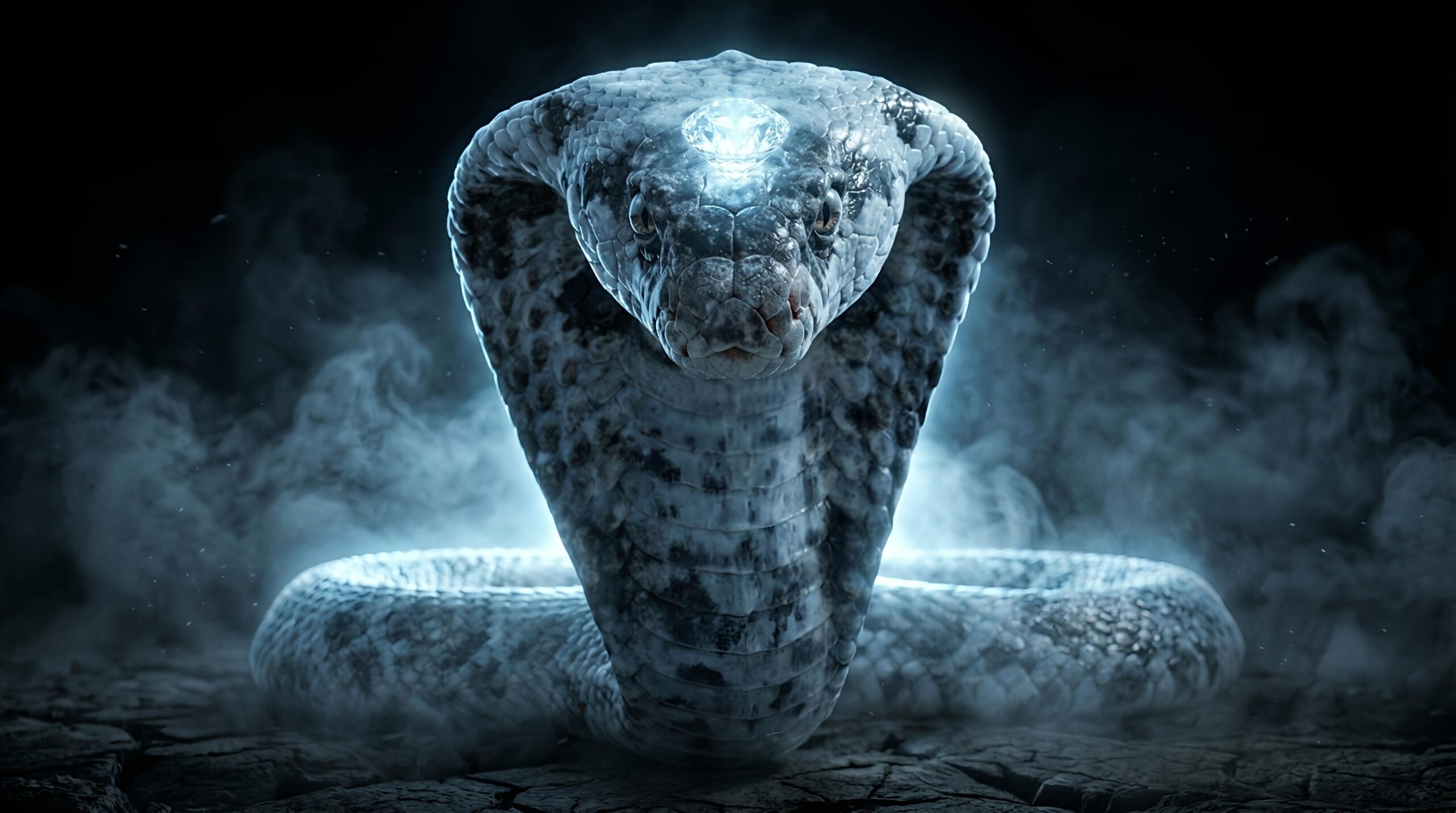
In the novel, Chandrahasa is tied to the Cave Tribe and its chosen warrior, Tara. Thousands of years later, the system that kept the weapons hidden begins to break, and the wrong people start searching.
To be clear: the Aksha Manis, the five tribes and this hidden system are the author’s original fiction. They are not part of the Valmiki Ramayana. The novel takes a real gap in the epic and imagines an answer.
If you have ever wondered how the magic and weapons of the Ramayana might work as a system, you may also enjoy Valmiki’s magic system of Ramayana, decoded.
Lord Shiva gave Chandrahasa to Ravana after Ravana tried to lift Mount Kailasa and was trapped under it. Pleased by Ravana’s hymns of praise, Shiva released him and gave him both the name Ravana and the sword. This story is told in the Uttara Kanda.
No one knows. The Valmiki Ramayana does not describe what happened to the sword after Ravana’s death. The most popular belief is that it returned to Shiva because Ravana misused it. No temple, museum or excavation has a verified relic of the sword.
In the Valmiki Ramayana, Chandrahasa plays no clear role in the final battle. Ravana fights mainly with bows and divine astras, and Ram kills him with the Brahmastra received from sage Agastya.
Chandrahasa combines “Chandra” (moon) and “hasa” (laughter or smile). It is usually translated as “the laughter of the moon”, and many readers link the name to a curved, crescent-shaped blade.
In the Aranya Kanda, Ravana cuts off Jatayu’s wings with his sword during the fight over Sita. Many popular retellings identify that sword as Chandrahasa, though not every version names it.
To read the original epic, the Valmiki Ramayana translation at valmikiramayan.net is a good starting point. For a general overview of the epic and its versions, see the Encyclopaedia Britannica entry on the Ramayana.

Where did Ram’s divine weapons go after the war? That mystery is at the heart of Weapon of Ram by Sunil Chandra Saha, now available on Amazon and Kindle.
Ready to Enter the World of Ram?