
Vishwamitra didn’t want an army. He came for Ram. That choice opens a story of duty, danger, and the weapons Ram must learn to wield. Here are two books for different reading moods, plus Weapon Of Ram by Sunil Chandra Saha, a post-Ramayana epic fantasy trilogy for readers who want to know what happened to Ram’s divine weapons after the war.
1. Weapon Of Ram
Weapon Of Ram is a post-Ramayana epic fantasy trilogy by Sunil Chandra Saha. Book One, Secret of the Aksha Mani, is set centuries after the Ramayana and asks where Ram’s divine weapons went. The author’s website also publishes Ramayana retellings about Ram’s formative experiences, key relationships, and moral choices.

The website’s retellings look at episodes through a dramatic third-person voice. That matters when a familiar battle raises a harder question: what does duty ask of Ram, and what does the use of a divine weapon reveal about him? The stories are interpretations, not translations of the Ramayana. The novels go further: three young warriors from guardian tribes protect Kodanda, Nandaka and Chandrahasa, the divine weapons that stayed on earth after Ram.
One useful way to approach this kind of fiction is to keep the source account and the retelling distinct. Valmiki’s Ramayana is an epic narrative, while a modern work may use its characters and themes to ask new questions. Readers who want context for Ram’s birth can explore the story of the Putra Kameshti Yagna, the sacred rite linked to his birth in the epic tradition.
For me, the strongest reason to pick this series is its focus. Many retellings end when the war ends. Weapon Of Ram asks what came next: why Ram hid his divine weapons, and who guards them. Its subject is the ethical weight behind the weapon, not simply the spectacle of a fight.
That focus also gives readers a clear way into the stories. If a weapon’s power seems to settle a conflict, ask what the weapon represents and why Ram uses it. The series’ interpretations can prompt that question without claiming that one modern reading is the only accepted account. A related story on Valmiki’s use of divine weapons gives another angle on how such powers shape epic storytelling.
The main caveat is that this isn’t a plain retelling of the complete Ramayana. It’s for readers interested in an imaginative story inspired by the epic, especially those curious about Ram’s divine weapons and the world after the war. If you want a concise version of the full traditional narrative first, the next pick is a better fit.
2. The Ramayana by Penguin Random House India
For readers who want a concise telling of the Ramayana, R.K. Narayan’s The Ramayana is the straightforward choice. It is known for a simple, generous style, making it a useful pick for someone who wants the epic’s main story without beginning with a much longer telling.
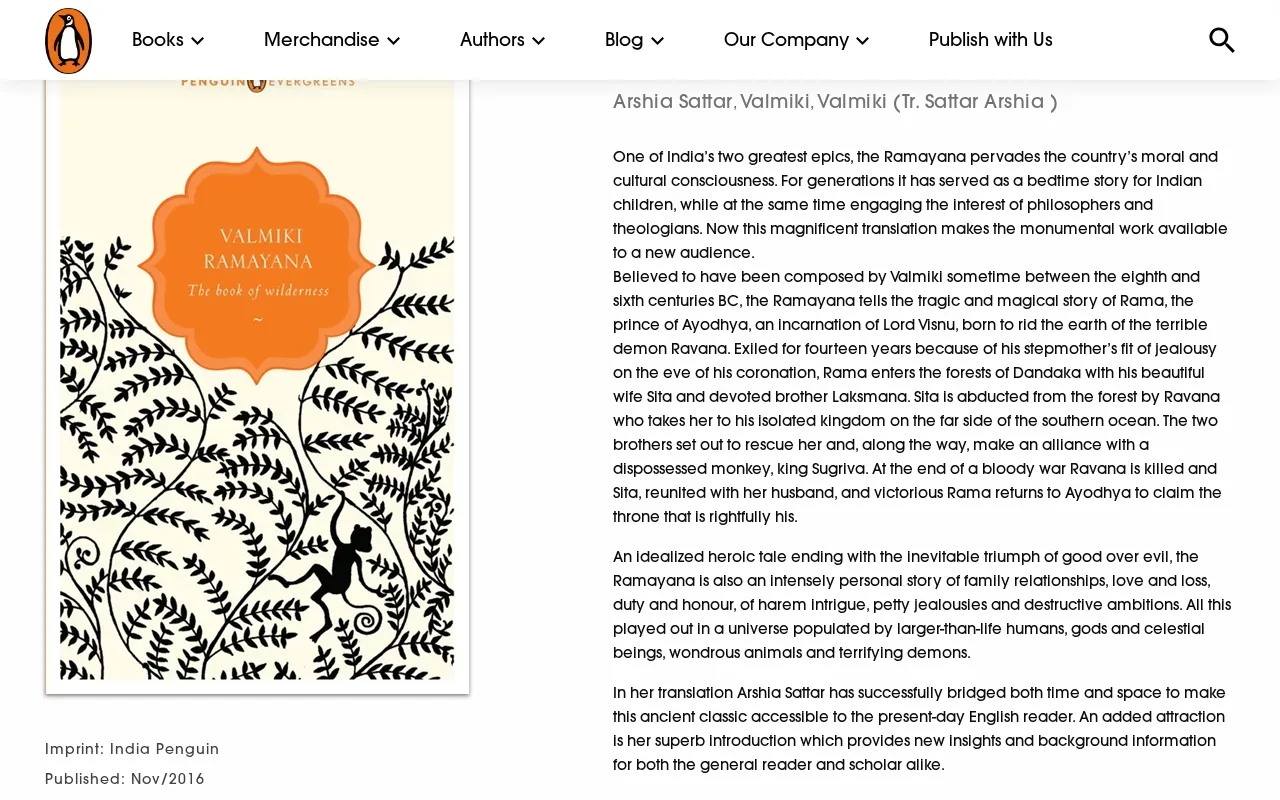
Narayan’s approach suits a reader who wants to follow the central arc and spend less time working through an extended text. Ram’s journey remains the focus, so readers can track how the duties of a prince and the demands of dharma shape his choices. The book’s appeal lies in its simplicity, rather than in a promise to retell every version or regional tradition.
The Ramayana has many tellings across languages and communities. So it helps to think of a modern retelling as one doorway into a large story, not the final word on every episode. The Ramayana’s long history as an epic also helps explain why readers may encounter different emphases when they move between versions.
According to me, this is a sound starting point if you want the broad story before exploring a narrower interpretation. It gives readers a chance to understand Ram’s journey as a whole, then return to questions about a particular episode or relationship with more context. That order can make a focused retelling feel clearer.
Its limitation is also part of its appeal: a concise version cannot give equal space to every character, debate, or regional telling. Readers who prefer illustrations or a child-friendly approach may find the next option more inviting.
For a closer look at the tension between a powerful weapon and the purpose behind its use, Weapon Of Ram also has a discussion of Shiva’s sword and Ram’s bow.
3. Ramayana for Children by Penguin Random House India
The Ramayana for Children by Bulbul Sharma, published by Puffin (Penguin Random House India), is a simple prose retelling with illustrations for young readers.
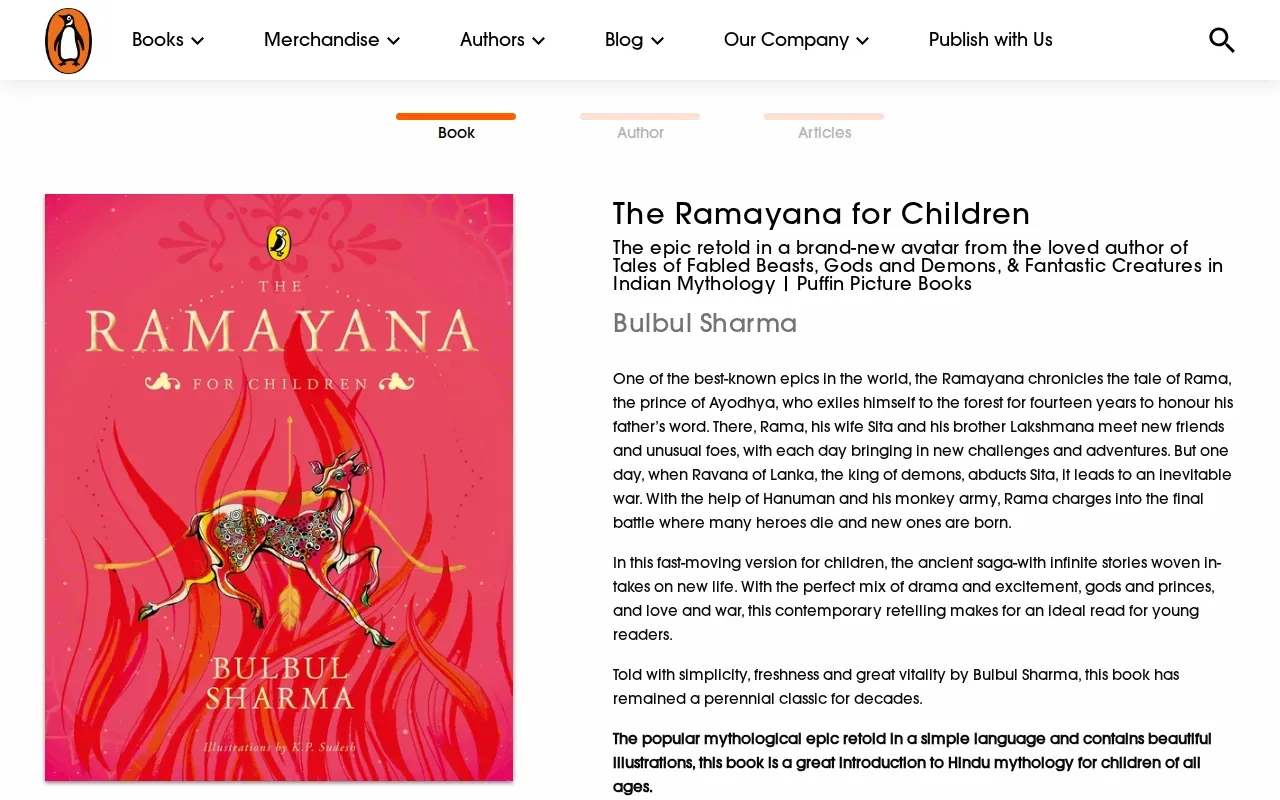
The illustrations add visual pauses, but at 192 pages this is a prose-led book, not a picture book. A parent or teacher choosing it for a young reader should expect the words to carry most of the story.
The Ramayana brings together a large cast and a sequence of events that can be hard to follow if a reader is new to the epic. A shorter children’s retelling can help establish who Ram is and what drives his journey before the reader meets more complex interpretations. For a child, that first clear account can make later questions about courage or duty easier to discuss.
There’s a trade-off. A children’s version may not pause long over the moral conflict behind each event, and illustrations alongside prose won’t replace a picture-led format. Adults seeking a detailed account of Ram’s early trials may prefer a more focused retelling. But for a young reader, or an adult who wants a light prose read, its clear intended audience is a real advantage.
When choosing it for a child, consider reading a chapter together and talking about the choices the characters face. A question such as “Why did Ram agree to go with Vishwamitra?” opens more discussion than a simple recap of the action. It lets the story carry its questions into the present without treating one retelling as the only possible interpretation.
At a glance: compare these Indian mythology books
These picks serve different needs. Choose by the kind of reading experience you want, not by assuming that one retelling can cover every version of the epic. The Mahabharata, like the Ramayana, is a major Indian epic, but the books below focus on Ramayana stories or interpretations.
| Book or series | Best suited to | Reading style | Keep in mind |
|---|---|---|---|
| Weapon Of Ram | Readers curious about Ram’s divine weapons and what came after the war | Online interpretations and post-Ramayana fantasy fiction | It is inspired fiction, not a translation |
| The Ramayana by R.K. Narayan | Readers seeking a concise telling | Simple prose retelling | It does not give equal detail to every telling or episode |
| Ramayana for Children by Penguin Random House India | Readers seeking a prose version | Prose with some illustrations | Prose-led, not a picture book |
If your main question is “What happens in the Ramayana?”, begin with Narayan’s concise retelling. If you want a prose version with some illustrations, choose this book. If you already know the broad story and want to imagine what happened to Ram’s divine weapons, Weapon Of Ram gives that focus.
Frequently asked questions
Which Indian mythology book should I read first?
If you want the Ramayana’s main story in concise prose, R.K. Narayan’s The Ramayana is a sensible first pick. If you already know the broad story and want a modern fictional story about Ram’s divine weapons, try Weapon Of Ram by Sunil Chandra Saha. The best starting point depends on whether you want a retelling of the epic or fiction inspired by it.
Is Weapon Of Ram a Ramayana translation?
No, Weapon Of Ram is not a translation or a religious text. It is an online publication with Ramayana retellings and interpretations, and its book series is post-Ramayana epic fantasy inspired by the Ramayana. Sunil Chandra Saha’s work is for readers interested in Ram’s formative experiences, divine weapons, and moral choices.
Is Ramayana for Children suitable for adults?
Yes, it can suit adults who want a light, accessible prose retelling. This book includes illustrations, but it is mainly a prose read. Adults looking for close analysis of each episode or a detailed account of competing traditions may want a different kind of book.
What is the difference between a Ramayana retelling and mythology-inspired fiction?
A retelling presents the epic’s story in a new style or for a new audience. Mythology-inspired fiction uses characters or ideas from the epic to tell an imaginative story. The distinction matters: Weapon Of Ram is fiction inspired by the Ramayana, while the other two picks are prose retellings for readers seeking the epic’s story.
Conclusion
Where did Ram’s divine weapons go after the war? That mystery is at the heart of Weapon of Ram by Sunil Chandra Saha. It’s fiction inspired by the Ramayana, not a translation. Visit the Weapon of Ram book page to begin with Book One.